




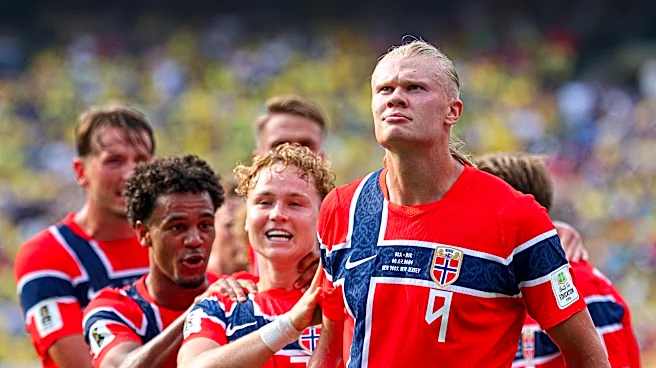


What's Happening?
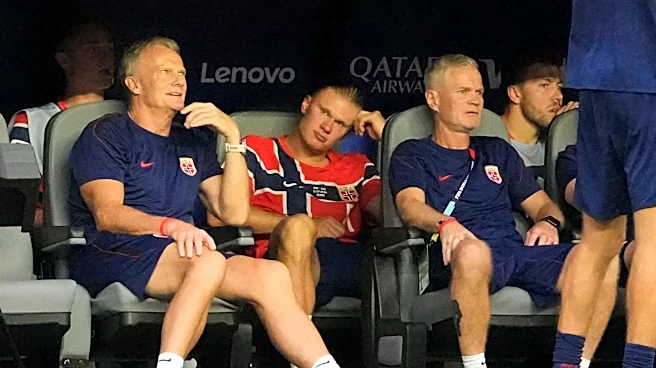
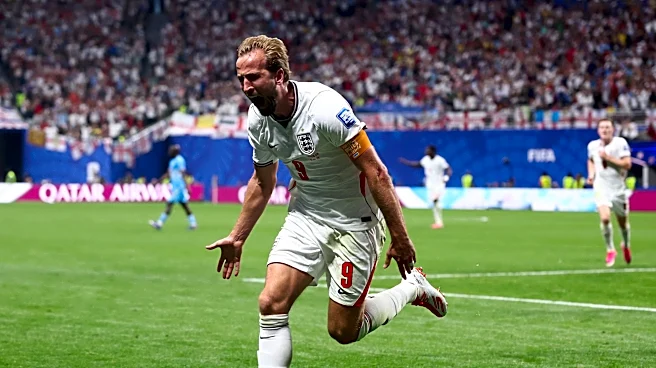
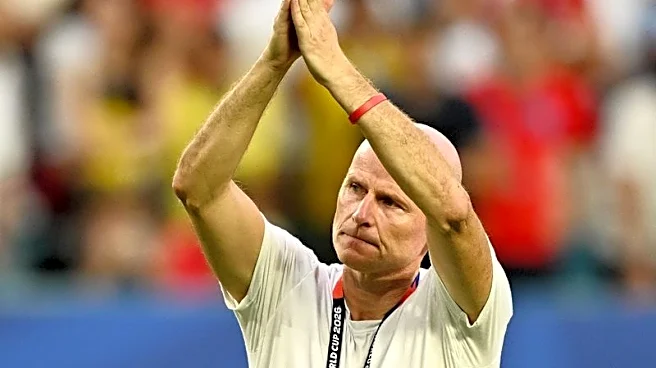
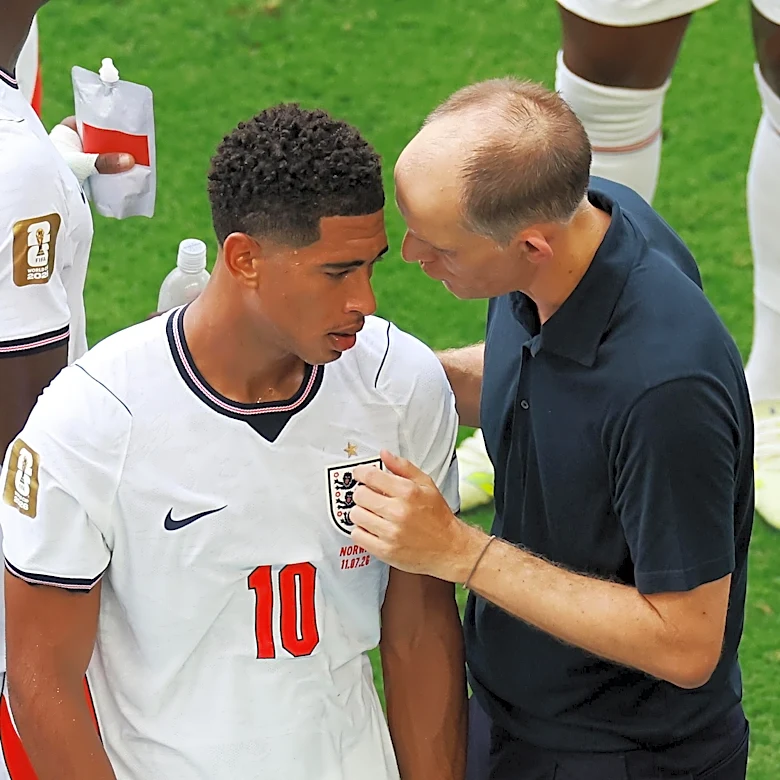
Erling Haaland's father, Alfie Haaland, expressed dissatisfaction with the referee following Norway's 2-1 defeat to England in the 2026 FIFA World Cup quarterfinals. The controversy arose when Jude Bellingham scored a goal for England, which was disputed
by Norway's team. The ball appeared to have hit a camera cable, potentially altering its trajectory, but FIFA's sensor technology indicated no such contact. Despite Norway's protests, the goal stood, and England advanced with Bellingham scoring again in extra time. This incident echoes a similar situation in a previous match between Portugal and Croatia.
Why It's Important?
The incident highlights ongoing debates about the reliability and transparency of technology in sports officiating. FIFA's use of sensor technology is intended to ensure fair play, but discrepancies like this can undermine trust among teams and fans. The outcome of such high-stakes matches can significantly impact national morale and the careers of players and coaches. For Norway, this loss marks a missed opportunity to advance further in the World Cup, while for England, it reinforces their position as a formidable team in the tournament.
What's Next?
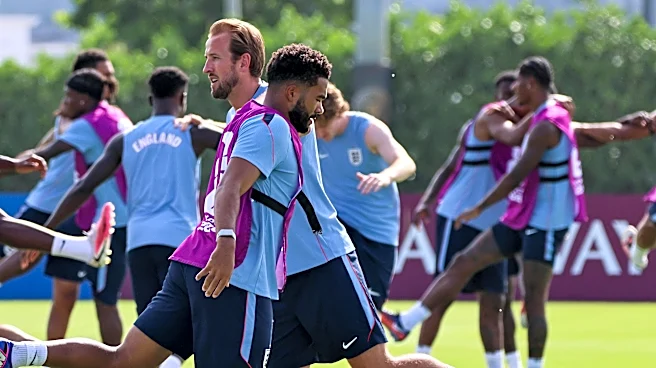
Norway will need to regroup and address any internal issues as they prepare for future international competitions. FIFA may face pressure to review and possibly enhance their technological systems to prevent similar controversies. England will continue their World Cup campaign, with increased scrutiny on their performance and the role of technology in their matches. Stakeholders, including teams, officials, and fans, may call for clearer guidelines and improved communication regarding the use of technology in officiating.