






What's Happening?
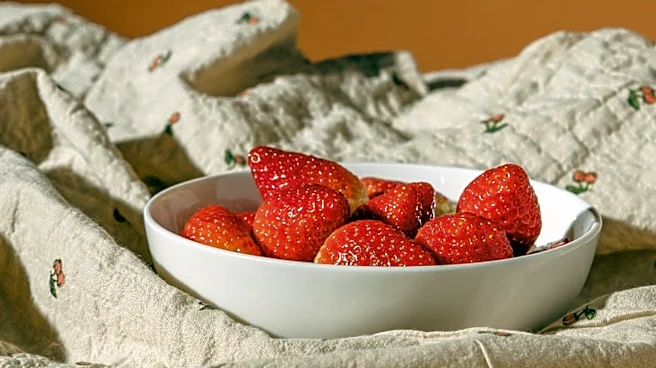
Driscoll’s, a prominent berry producer, advises consumers to remove strawberries from refrigeration an hour or two before eating them to allow them to reach room temperature. This practice, according to the company, significantly enhances the flavor profile
of the fruit. The recommendation is supported by various culinary and lifestyle sources, including Southern Living, BBC Good Food, and even Worcestershire County Council, all of which suggest a similar warm-up period for strawberries. The rationale behind this advice is that cold temperatures can suppress the natural sweetness and aromatic compounds of strawberries. By allowing them to warm up, these elements become more pronounced, leading to a more enjoyable eating experience. While some might find this an extra step, the consensus among these sources is that the difference in taste is notable.
Why It's Important?
This recommendation from Driscoll's, a major player in the U.S. berry market, could influence consumer habits and potentially impact the broader produce industry. If widely adopted, the practice of warming strawberries before consumption could lead to increased consumer satisfaction with the product, potentially boosting sales and demand for fresh berries. For retailers, this might necessitate subtle changes in how strawberries are presented or marketed, perhaps with accompanying advice on optimal consumption. Furthermore, this highlights a broader trend in food appreciation, where subtle preparation techniques are emphasized to maximize natural flavors. It underscores the importance of temperature in food science and how it affects our perception of taste, moving beyond mere storage to active preparation for consumption. This could also inspire similar recommendations for other fruits, encouraging a more mindful approach to enjoying fresh produce.
What's Next?
Consumers who adopt this practice may experience a noticeable improvement in the taste of their strawberries, potentially leading to a shift in how fresh berries are consumed in U.S. households. Food bloggers and culinary influencers might further popularize this tip, integrating it into recipes and food preparation guides. Berry producers and retailers could begin to incorporate this advice into their packaging or marketing materials, educating consumers on how to best enjoy their products. This could also spark further research into the optimal serving temperatures for various fruits, potentially leading to new industry standards or consumer recommendations. The emphasis on maximizing natural flavor through simple preparation could become a more prevalent theme in food marketing and consumer education.
Beyond the Headlines
The advice to warm strawberries before eating touches upon the intricate relationship between temperature, aroma, and taste perception. Strawberries, despite their perceived sweetness, do not contain an exceptionally high sugar content. Instead, their appeal largely stems from their aromatic compounds. Cold temperatures inhibit the release of these volatile compounds, making the fruit seem less flavorful. As the strawberries warm, these aromas are released, enhancing the overall sensory experience and making the fruit taste sweeter and more vibrant. This phenomenon is not unique to strawberries; similar principles apply to other foods like cheese, where warming can reduce unpleasant notes and bring out richer flavors. This insight encourages a deeper understanding of how we interact with our food, suggesting that simple adjustments in preparation can unlock a richer, more nuanced appreciation of natural ingredients.