



What's Happening?
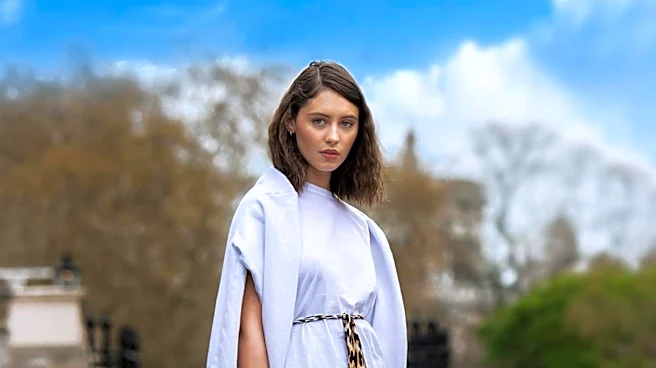
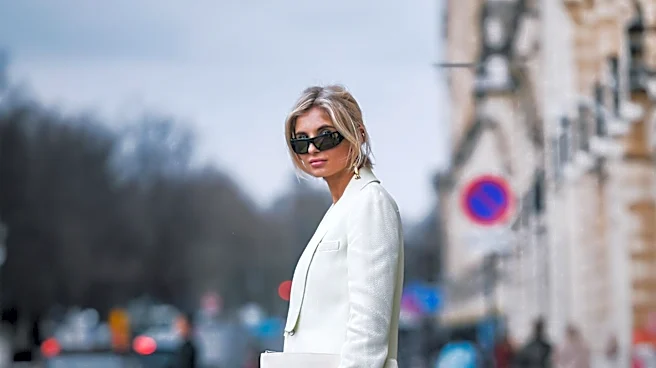
For the Fall/Winter 2025 season, several luxury fashion brands, including Balmain, Chanel, and Kallmeyer, are showcasing new trends in outerwear and general apparel. A prominent feature is collarless outerwear, characterized by crew necklines and cocoon
silhouettes. These pieces are being presented in diverse materials such as tiger prints, tweed, and shimmering gold fabric. Designers are also focusing on elevating casual looks by pairing these outerwear styles with knee-length skirts and polished shoes. Additionally, Burberry's Winter 2025 collection draws inspiration from British creativity, featuring coats, scarves, evening wear, and suits crafted from twisted fabrics. Marks & Spencer is highlighting tailored jackets, satin separates in warm chocolate brown and rich navy blue, and cardigans with feminine tailoring, alongside the reintroduction of faux fur jackets.
Why It's Important?
The introduction of these Fall/Winter 2025 collections by major luxury and retail brands signifies the upcoming shifts in fashion trends that will influence consumer spending and retail strategies in the U.S. market. The emphasis on collarless outerwear, specific fabric choices like tweed and tiger prints, and the pairing of elevated casual wear with polished accessories will likely dictate inventory decisions for U.S. retailers and fashion buyers. Brands like Burberry, with its British-inspired collection, and Marks & Spencer, focusing on tailored pieces and specific color palettes, indicate a move towards sophisticated yet comfortable styles. This trend cycle impacts manufacturers, designers, and marketers, as they adapt production and advertising to align with these emerging aesthetics, ultimately shaping what is available and desirable to American consumers in the coming seasons.
What's Next?
As these Fall/Winter 2025 collections are previewed, the next phase will involve their official release and availability in stores and online. Consumers can anticipate seeing these trends, such as collarless outerwear and specific fabric choices, integrated into broader fashion offerings across various price points. Retailers will begin stocking these items, and fashion publications and influencers will further disseminate these trends, influencing consumer purchasing decisions. The success of these collections will be closely monitored by the fashion industry to gauge consumer reception and inform future design and production cycles. We can expect to see these styles trickle down from high-end luxury to more accessible brands, becoming prevalent in U.S. fashion markets.
Beyond the Headlines
Beyond the immediate commercial implications, these fashion trends reflect broader cultural and societal shifts. The move towards more comfortable yet polished styles, as seen in the elevated casual wear and tailored pieces, could indicate a lasting impact of recent years on how people dress for both work and leisure. The use of diverse textures and prints, like tiger print and shimmering gold, suggests a desire for expressive and unique personal style. The emphasis on specific color palettes, such as chocolate brown and navy, also points to evolving aesthetic preferences. These trends are not just about clothing; they are a reflection of evolving lifestyles, values, and the ongoing dialogue between comfort, practicality, and luxury in contemporary fashion.