





What's Happening?
NextSilicon has unveiled its Arbel RISC-V test chip at SC26, marking a significant step in the development of RISC-V host processors for data centers. While NextSilicon is primarily known for its Maverick-2 dataflow accelerator, the Arbel chip represents
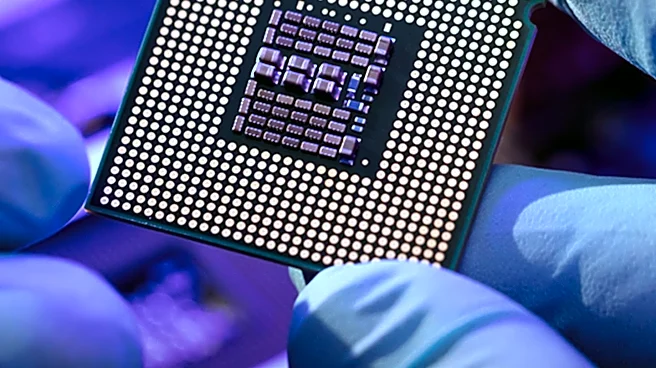
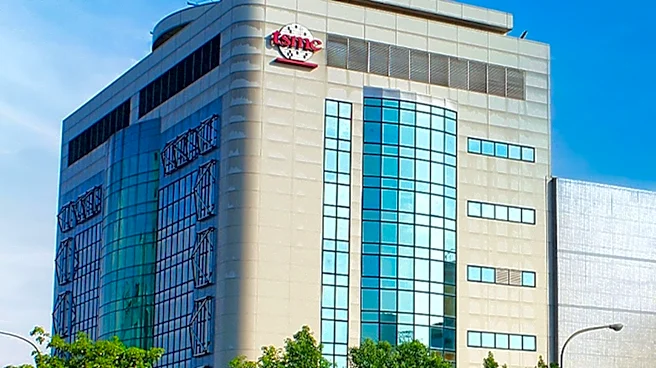
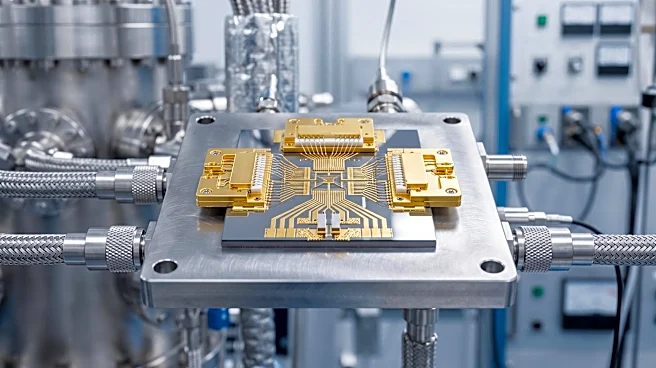
a distinct initiative to explore the RISC-V server processor market. The company displayed the Arbel chip on a test board within a glass case at its booth. This 5nm TSMC part is designed to operate at 2.5GHz, with expectations for shipping versions to reach speeds beyond 3GHz and incorporate 64-128 cores. The Arbel chip originated as a serial control processor for the Maverick-2 before evolving into a standalone server processor. Its specifications include a 10-wide issue, a 480-entry reorder buffer, a 64KB instruction cache, a 1MB L2 cache, and a 2MB L3 cache per core, alongside RVV vector support. The chip is also slated to support CXL in addition to DDR5.
Why It's Important?
The introduction of NextSilicon's Arbel RISC-V CPU is important as it signals the growing momentum and diversification of the RISC-V architecture into the data center segment. This development offers a potential alternative in a market currently dominated by x86 and Arm architectures. For U.S. industries, particularly in technology and data infrastructure, the emergence of viable RISC-V server processors could foster increased competition, potentially leading to innovation, cost efficiencies, and greater supply chain diversity. Companies seeking to reduce reliance on proprietary instruction set architectures may find RISC-V an attractive open-standard option. The exploration of larger RISC-V host CPUs like Arbel indicates a maturing ecosystem for the open-source ISA, which could attract further investment and development in related hardware and software within the U.S. tech sector. This could also impact national security considerations by providing a domestically controllable processor architecture.
What's Next?
The next steps for NextSilicon's Arbel RISC-V CPU involve further development and refinement to meet the performance and scalability demands of data centers. The company anticipates a shipping version will need to achieve clock speeds exceeding 3GHz and integrate 64-128 cores, suggesting ongoing engineering efforts. The industry expects to see more RISC-V adoption in data centers around 2028, indicating a timeline for potential market entry and broader availability of such processors. As the Arbel chip moves closer to launch, it will likely undergo extensive testing and validation to ensure compatibility and performance within existing data center infrastructures. Potential reactions from major stakeholders could include increased interest from cloud service providers and enterprise data centers looking to evaluate RISC-V alternatives, as well as competitive responses from established CPU manufacturers in the server market.
Beyond the Headlines
The development of the Arbel RISC-V CPU by NextSilicon extends beyond immediate product launches, hinting at deeper shifts in the semiconductor industry. The increasing viability of RISC-V as a host processor for data centers challenges the long-standing dominance of proprietary architectures, fostering a more open and collaborative approach to chip design. This could lead to a democratization of processor technology, enabling smaller players and startups to innovate more freely without the licensing constraints associated with established ISAs. Ethically, the open-source nature of RISC-V promotes transparency and reduces vendor lock-in, potentially empowering users with greater control over their hardware. Legally, the open standard could mitigate intellectual property disputes common in the highly competitive chip industry. Culturally, it signifies a growing preference for open standards and collaborative development models within the technology sector, potentially influencing future hardware and software ecosystems.