







What's Happening?
Microchip Technology Inc. (NASDAQ: MCHP) reported that it shipped more in the September quarter than forecasted, with non-GAAP net sales reaching $1.622 billion, a 9.2% sequential increase and 42.2% year-over-year. However, CEO, Chair, and President Steve
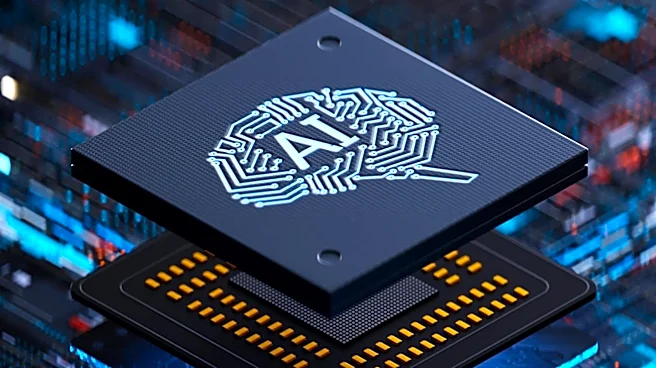
Sanghi stated on November 5, 2026, that the company could have shipped even more if not for AI buyers monopolizing supplier factories, leading to renewed chip shortages in parts of the supply chain. This surge in AI demand has caused lead times for standard products to extend from four to eight weeks to six to 32 weeks. The company's stock fell significantly, dropping 10.02% to $58.35 on November 6, 2026, following a broader sector-wide chip selloff. Microchip's data center business, which also benefits from AI, topped $250 million in the quarter, marking a 55.7% increase from the previous year.
Why It's Important?
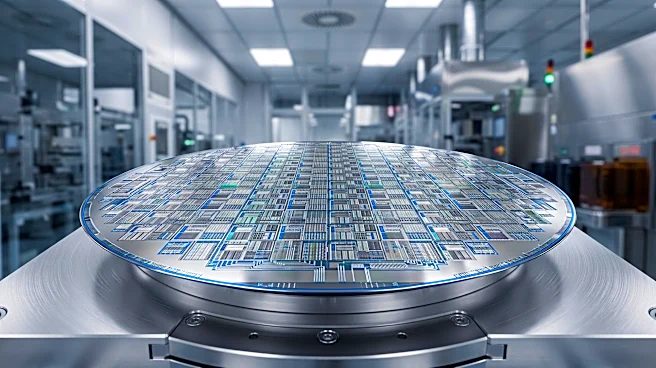
The resurgence of chip shortages, driven by the escalating demand from AI companies, has significant implications for various U.S. industries reliant on semiconductors. Microchip Technology, a key supplier of embedded control solutions, is experiencing factory capacity constraints as AI customers are reportedly 'crowding everyone out' from packaging and test lines at outside assembly and test houses (OSATs). This situation could lead to increased costs and delayed product launches for companies across industrial, automotive, consumer, aerospace, defense, communications, and computing sectors. While Microchip itself benefits from AI demand through its data center segment, the broader impact of these shortages could stifle innovation and production for other businesses, potentially leading to higher prices for consumers and reduced competitiveness in global markets. The extended lead times mean that companies will face longer waits for critical components, disrupting supply chains and potentially impacting revenue recognition for many businesses.
What's Next?
Microchip Technology anticipates that moving production work in-house or to alternative suppliers will take approximately six months, suggesting that the current supply chain pressures could persist for the near future. The company's guidance for the December quarter projects net sales between $1.573 billion and $1.638 billion, with non-GAAP gross margin between 64% and 65%. Furthermore, major foundries and OSATs are expected to raise prices again starting around January, which Microchip plans to absorb for now but may pass on to customers if costs continue to climb. Analysts have lowered price targets for Microchip's stock, though most remain above the current trading price, indicating a belief that the pressure is temporary. The March-quarter guidance will be crucial in determining if delayed backlog translates into revenue, confirming whether the current challenges are short-term or indicative of more prolonged margin damage.
Beyond the Headlines
The current chip shortage, exacerbated by AI demand, highlights a critical vulnerability in the global technology supply chain and its potential to reshape industrial priorities. The shift of manufacturing capacity towards AI-specific components could lead to a strategic re-evaluation of semiconductor production and allocation. This situation raises questions about the long-term sustainability of rapid AI expansion without corresponding infrastructure growth, potentially leading to a 'two-speed' technology economy where AI-focused companies thrive at the expense of other sectors. Ethical considerations may also arise regarding equitable access to critical semiconductor resources, especially if essential industries face prolonged delays. The development could accelerate investments in domestic semiconductor manufacturing and diversification of supply chains to mitigate future disruptions, influencing national security and economic policy debates in the U.S.