



What's Happening?
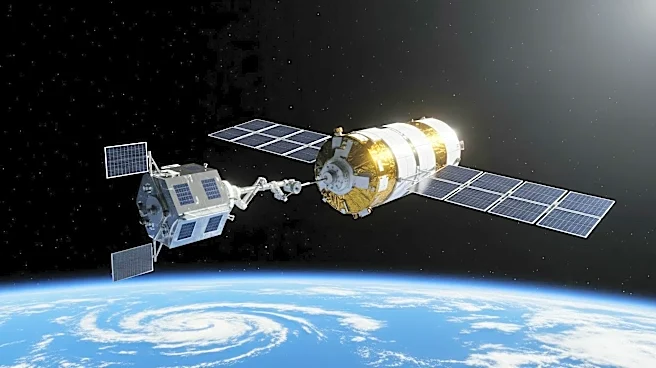
Reflect Orbital, a startup focused on using in-space mirrors to provide on-demand sunlight, has been granted a license by the Federal Communications Commission (FCC) to launch its first demonstration satellite, Eärendil-1. This mission aims to validate
the company's core technology, which involves an 18-meter film reflector designed to beam sunlight down to Earth. The broader plan includes deploying a constellation of 50,000 mirrors. However, this initiative has sparked concerns among astronomers and scientists. They argue that the mirrors could significantly impact space science conducted from terrestrial telescopes and disrupt natural cycles of flora and fauna by altering light conditions. Despite these concerns, the FCC stated that environmental and astronomical impacts fall outside its regulatory scope, allowing the mission to proceed.
Why It's Important?
The approval of Reflect Orbital's mission by the FCC highlights a growing intersection between technological innovation and environmental stewardship. The potential deployment of a large constellation of mirrors could have far-reaching implications for both scientific research and ecological systems. Astronomers fear that the mirrors could interfere with observations, while ecologists worry about the disruption of natural light cycles. This situation underscores the need for comprehensive regulatory frameworks that address the environmental and scientific impacts of emerging space technologies. The decision also reflects the challenges regulatory bodies face in balancing technological advancement with environmental and scientific integrity.
What's Next?
Reflect Orbital plans to demonstrate its ability to control reflected sunlight precisely, ensuring it is used appropriately and in coordination with affected communities and scientific institutions. The company aims to prove that its technology can operate without significant adverse effects on astronomy and local environments. Future steps will likely involve further regulatory reviews and potential adjustments to the technology based on feedback from the scientific community. The outcome of this initial mission could influence future regulatory decisions and the development of similar technologies.