




What's Happening?
Shai Schnitzer, the newly elected president of the Israel Diamond Exchange, has announced his immediate priority is to work towards eliminating the 12.5% tariff imposed by the United States on Israeli diamond imports. This tariff is a significant concern
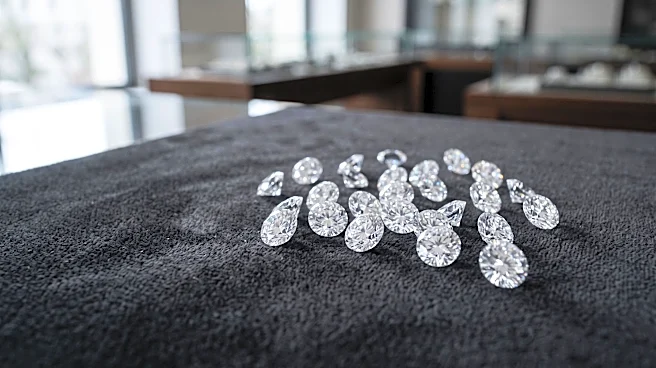
for the Israeli diamond industry, as the American market accounts for approximately 60% of its exports. Schnitzer's election comes at a critical time, with Israel's diamond exports having fallen to their lowest recorded levels, with trade volumes shrinking to about one-third of what they were a decade ago. The industry faces challenges from declining global diamond prices, weakened demand, and increasing competition from significantly cheaper laboratory-grown diamonds. Schnitzer emphasized that there is no reason for the US, Israel's largest trading partner, to have such a barrier. He expressed confidence that reaching an understanding with the US would position the industry for a rebound. The outgoing president, Nissim Zuaretz, highlighted that competitors like Belgium can export diamonds to the US without tariffs, putting Israeli exporters at a disadvantage.
Why It's Important?
The 12.5% US tariff significantly impacts the competitiveness and economic viability of the Israeli diamond industry, which relies heavily on the American market. With 60% of Israeli diamond exports destined for the US, this tariff directly increases the cost of Israeli diamonds for American consumers and businesses, potentially shifting demand towards untariffed competitors. This situation exacerbates an already challenging period for the Israeli diamond sector, which is grappling with a global decline in prices, reduced demand, and the rise of laboratory-grown diamonds. The tariff not only affects the profitability of Israeli diamond dealers but also has broader implications for employment and economic stability within Israel's diamond industry. The disparity in tariff treatment compared to other diamond-exporting nations like Belgium creates an uneven playing field, making it harder for Israeli businesses to compete effectively in the global market. The outcome of Schnitzer's efforts could determine the future trajectory of a historically significant Israeli industry.
What's Next?
Shai Schnitzer plans to immediately engage in efforts to negotiate the removal of the 12.5% US tariff on Israeli diamonds. This will likely involve diplomatic discussions and lobbying efforts with US trade representatives and policymakers. The success of these efforts could lead to a significant boost for the Israeli diamond industry, potentially restoring its competitiveness in the crucial American market. Concurrently, Schnitzer aims to implement strategies to strengthen Israel's diamond center, including a coordinated campaign with the World Federation of Diamond Bourses to promote natural diamonds and distinguish them from laboratory-grown alternatives. The industry will also leverage a new tax arrangement between the diamond exchange and the Israel Tax Authority, which is expected to improve its competitive standing against rival trading centers in Dubai, India, and Belgium. The industry's future will depend on its ability to adapt to global market shifts, address competition from lab-grown diamonds, and successfully navigate international trade policies.
Beyond the Headlines
The push to remove the US tariff on Israeli diamonds highlights broader issues of international trade relations and the impact of protectionist policies on specific industries. The tariff, while seemingly a direct economic measure, can strain trade partnerships and create economic disadvantages for allies. For the diamond industry, this situation underscores the evolving landscape where traditional markets face pressure from new technologies (lab-grown diamonds) and shifting global supply chains. The debate over natural versus lab-grown diamonds also touches upon consumer values, luxury perceptions, and the marketing strategies employed to differentiate products. Furthermore, the relocation of diamond operations to centers like Dubai due to tax incentives points to a global competition for business, where favorable regulatory and fiscal environments play a crucial role. The outcome of these tariff negotiations could set a precedent for how the US balances trade protection with maintaining strong economic ties with key partners.