



What's Happening?
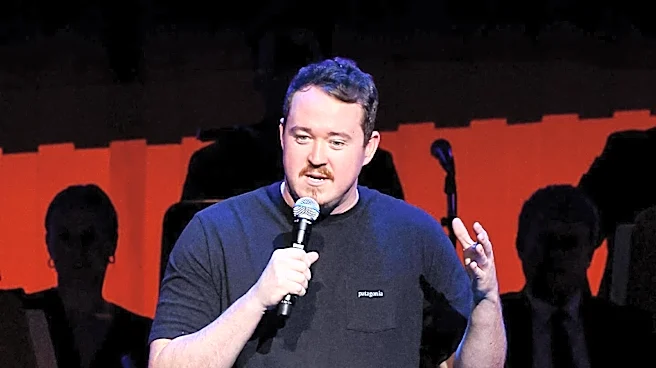
Casey Anthony has publicly criticized comedian Shane Gillis' recent monologue on 'Saturday Night Live,' urging men to "do better." Gillis, during his third time hosting the show on October 10, made a joke about women's attire at the gym, stating, "I haven't
been to the gym in so long; I didn't know women just dress like [expletive] now?" He also commented on women filming at the gym and wearing "neon" shorts. Anthony, who was acquitted in 2011 for the murder of her daughter, Caylee Anthony, responded on her Substack account on October 12. She asserted that women can dress as they please and condemned "toxic masculinity," telling men with opinions on women's clothing to "go [expletive] themselves." Anthony also advised women to be mindful of the men they elect in upcoming midterm elections.
Why It's Important?
Casey Anthony's commentary on Shane Gillis' 'SNL' monologue is significant as it adds a prominent, albeit controversial, voice to the ongoing public discourse surrounding misogyny, gender dynamics, and appropriate humor in media. Her remarks, particularly her call for men to "do better" and her advice regarding midterm elections, highlight the intersection of social commentary and political engagement. This event underscores the power of celebrity, even for figures with complex public histories, to influence conversations on sensitive topics. It also reflects the broader cultural sensitivity around gender issues and the scrutiny faced by comedians for their material, especially on platforms with wide reach like 'Saturday Night Live.' The incident contributes to the ongoing debate about freedom of speech versus social responsibility in entertainment.
What's Next?
The public reaction to Casey Anthony's statements and Shane Gillis' monologue is likely to continue, with further discussions across social media, news outlets, and entertainment commentary platforms. Gillis may face continued scrutiny or choose to address the backlash in future performances or interviews. Anthony's foray into social commentary, particularly her advice on political choices, could lead to further engagement from her on similar topics. This incident may also prompt broader conversations within the entertainment industry about the boundaries of comedic material and the impact of jokes on different demographics. The midterm elections, as mentioned by Anthony, will serve as a backdrop for continued discussions on gender equality and political representation.
Beyond the Headlines
This incident delves into deeper societal issues concerning gender roles, public perception, and the responsibility of public figures. Anthony's strong condemnation of "toxic masculinity" and her assertion that women do not dress for men's approval reflect a growing movement for gender equality and bodily autonomy. The controversy surrounding Gillis' joke also highlights the evolving standards of humor and what is considered acceptable in mainstream media. It raises questions about the role of comedy in challenging or reinforcing societal norms. Furthermore, Anthony's pivot to social activism, despite her past, suggests a desire to redefine her public image and contribute to contemporary social debates, illustrating the complex ways individuals seek relevance and impact beyond their initial public narratives.