






What's Happening?
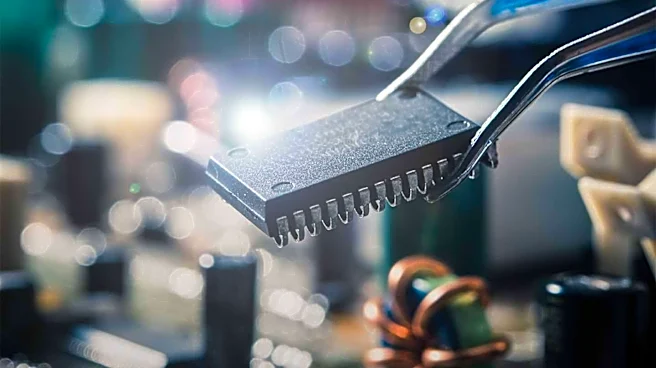
Micron Technology, a leading semiconductor memory and storage provider, has reported an operating margin of approximately 81% for its fiscal fourth quarter of 2026, with revenues reaching $54.23 billion. This significant financial performance, representing
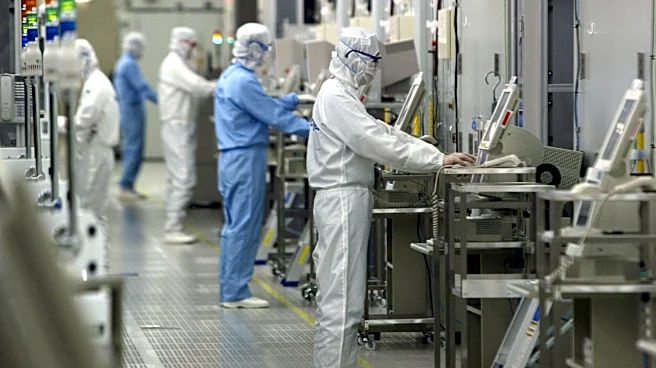
a 379% year-over-year increase, is largely driven by the escalating demand for high-bandwidth memory (HBM) and conventional DRAM, essential components for artificial intelligence (AI) models. The company, alongside competitors like SK Hynix and Samsung, dominates the global DRAM and HBM markets. The surge in AI development has created a supply shortage, prompting buyers to secure memory products years in advance through long-term agreements. Micron has already booked 75% of its 2027 output, indicating sustained high demand and pricing power. To address the supply constraints, Micron has committed substantial investments, including $24 billion for a new wafer fab in Singapore by 2028 and an additional $7 billion for HBM packaging.
Why It's Important?
The robust financial performance of Micron Technology underscores the profound impact of artificial intelligence on the semiconductor industry. The high operating margins, typically seen in software companies, highlight the critical role of memory chips in the AI ecosystem and the premium placed on HBM due to its efficiency in handling large data volumes. This trend signifies a shift in the semiconductor market, moving away from its historically cyclical nature towards a period of sustained high demand and profitability driven by technological innovation. The long-term agreements and pre-booked output provide stability and predictability for Micron, but also indicate potential challenges for AI developers and other tech companies facing constrained supply and higher costs for essential memory components. The substantial investments in new manufacturing capacity reflect a strategic response to meet this unprecedented demand, aiming to alleviate future supply bottlenecks and maintain market leadership.
What's Next?
Micron Technology, along with its competitors, anticipates that supply constraints for HBM and DRAM will persist until at least 2030. This outlook suggests continued high prices and strong demand for memory products in the coming years. The company's significant investments in new production facilities, such as the Singapore wafer fab and HBM packaging capabilities, are crucial steps towards increasing supply, but these projects will take time to come online. Stakeholders will be closely monitoring the progress of these capacity expansions and the booking rates for 2028 and beyond to gauge the market's future trajectory. The emergence of new competitors, such as Chinese DRAM maker ChangXin Memory Technologies, which recently went public, could introduce new dynamics to the market, although incumbents like Micron currently benefit from long-term contracts that provide a buffer against immediate competitive pressures. The ability of new entrants to penetrate the high-end HBM market will be a key factor to watch.
Beyond the Headlines
The current boom in the AI memory market, exemplified by Micron's exceptional margins, raises broader questions about technological dependencies and global supply chain resilience. The concentration of HBM and DRAM production among a few key players creates potential vulnerabilities, as any disruption to these manufacturers could have significant ripple effects across the entire AI industry and beyond. The substantial capital investments required for new fabs and advanced packaging also highlight the high barriers to entry, reinforcing the dominance of established companies. Furthermore, the intense demand for memory chips could accelerate innovation in memory technologies, pushing for even more efficient and powerful solutions to keep pace with the rapid advancements in AI. The long-term implications could include increased strategic competition among nations to secure domestic memory production capabilities, viewing it as a critical component of national technological sovereignty and economic security.