



What's Happening?
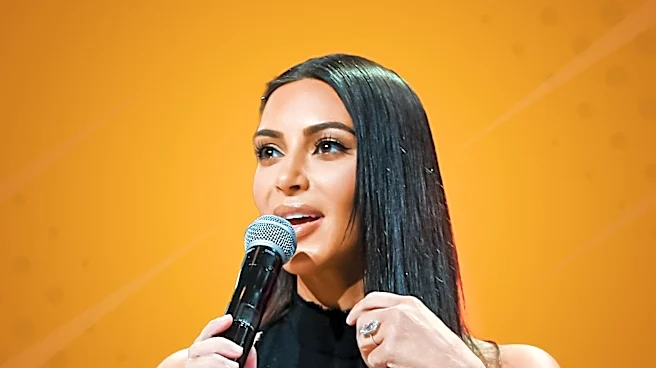
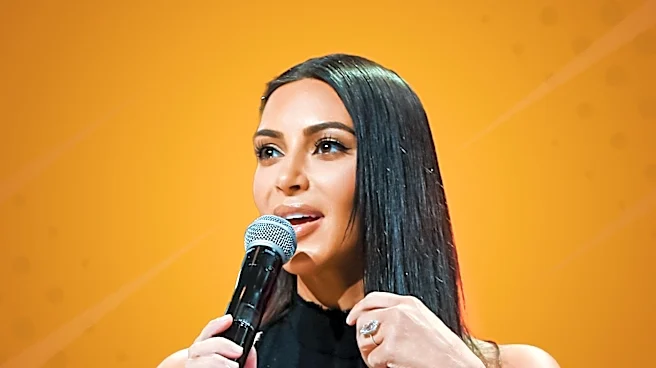
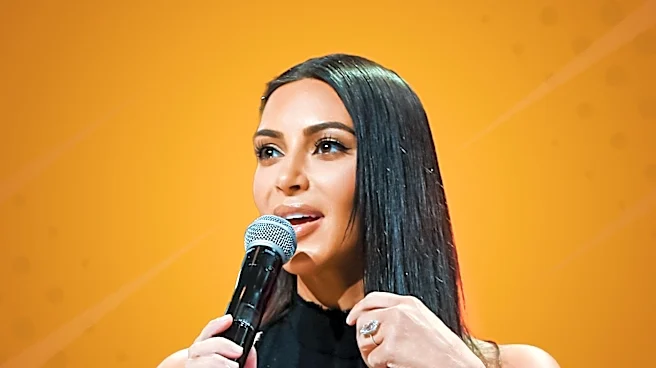
Kim Kardashian, a prominent reality star and entrepreneur, has once again publicly asserted her belief that the moon landing never occurred. This claim was made during a recent episode of 'The Kardashians,' where she discussed her skepticism with a scientist,
Dr. Kate Biberdorf, a chemistry professor from Notre Dame. Kardashian cited common conspiracy theories, such as the flag appearing to wave on the moon, discrepancies in astronaut shoe prints, and the absence of stars in moon landing footage. This is not the first time Kardashian has voiced this belief; she made similar statements in 2025, which prompted a response from NASA. NASA Acting Administrator Sean Duffy previously addressed her claims, stating, 'Yes, @KimKardashian, we’ve been to the Moon before… 6 times!' and highlighted the ongoing Artemis program. Kardashian's sister, Khloe Kardashian, also indicated in a confessional that the moon landing hoax is a prevalent theory within their household.
Why It's Important?
The repeated promotion of moon landing conspiracy theories by a high-profile public figure like Kim Kardashian can have several implications. Firstly, it contributes to the spread of misinformation, potentially eroding public trust in scientific institutions and historical events. Given Kardashian's significant social media reach and influence, her statements can expose a large audience, particularly younger demographics, to unsubstantiated claims. This can normalize skepticism towards established facts and scientific consensus. Secondly, it places organizations like NASA in a position where they must actively counter such narratives, diverting resources and attention from their primary missions of space exploration and scientific research. The engagement from NASA Acting Administrator Sean Duffy underscores the perceived need to address these claims directly, highlighting the challenge of combating misinformation in the digital age. The persistence of such theories, even after official rebuttals, indicates a broader societal trend of distrust in authority and a susceptibility to alternative explanations.
What's Next?
Given Kim Kardashian's history of reiterating her moon landing skepticism, it is likely that this topic may resurface in future episodes of 'The Kardashians' or in her public commentary. NASA and other scientific organizations may continue to monitor and respond to such high-profile instances of misinformation, potentially through educational campaigns or direct engagement on social media. The ongoing public discourse around such conspiracy theories could also prompt further discussions about media literacy and critical thinking, especially concerning information consumed on platforms like TikTok, which Kardashian herself referenced as a source for her beliefs. The broader impact might include increased public interest in the historical facts of the moon landing, potentially leading to both greater understanding and continued debate among different segments of the population.
Beyond the Headlines
The recurring nature of Kim Kardashian's moon landing conspiracy theory touches upon deeper societal trends regarding the consumption and dissemination of information. It highlights the challenge of distinguishing fact from fiction in an era dominated by social media and influencer culture. The ease with which unverified claims can gain traction, even in the face of overwhelming scientific evidence, points to a broader issue of declining trust in traditional institutions and expert authority. This phenomenon is not limited to space exploration but extends to various scientific and political topics. The engagement of a reality star in such debates also underscores the blurring lines between entertainment, personal opinion, and factual reporting, potentially influencing public perception and contributing to a post-truth environment where subjective beliefs can hold as much weight as objective facts. This trend has significant implications for public education and the future of informed civic discourse.