






What's Happening?
Truckload linehaul rates, which exclude fuel and accessorial surcharges, experienced a substantial rise in July, as reported by Cass Information Systems. The Cass TL linehaul index increased by 2.3% from June and was 8.6% higher year-over-year, marking
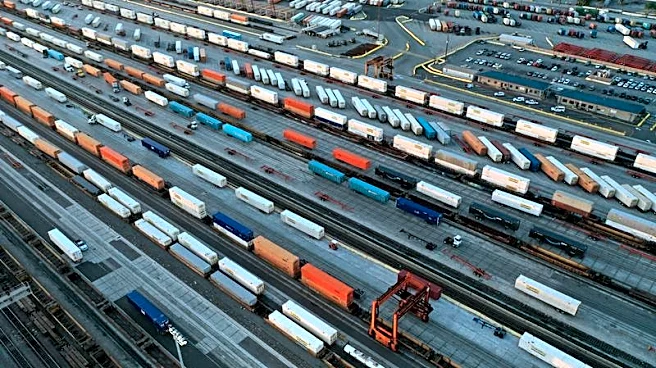
the 19th consecutive year-over-year increase and the largest in four years. Over the past two years, the dataset has grown by 11.2%. This index primarily reflects contract rates but also includes for-hire spot rates. Despite this rate surge, freight shipments tracked by Cass saw a decline of 4.8% year-over-year in July, accelerating from a 4.1% year-over-year decrease in June. On a seasonally adjusted basis, shipments were down 2.2% from June. The report attributes some of this softness to higher fuel prices and a reduction in capacity, noting that rail intermodal is gaining market share from trucking.
Why It's Important?
The significant increase in truckload linehaul rates, despite a decline in shipment volumes, indicates a tightening market for freight transportation in the U.S. This trend suggests that shippers are facing higher costs to move goods, which could impact consumer prices and supply chain efficiency. The 'flight to quality' observed by publicly traded carriers, where shippers are becoming more selective about their partners, highlights concerns over compliance and reliable capacity. This shift benefits larger, more established carriers like Schneider National and Werner Enterprises, which are reporting double-digit rate increases on contract renewals and planning fleet expansion. Conversely, smaller, less compliant carriers may struggle, contributing to the overall reduction in available capacity and further driving up rates. The growing share of rail intermodal also points to a strategic shift in freight logistics, as businesses seek alternative, potentially more cost-effective, transportation methods.
What's Next?
The Cass report projects that the shipments index will be down 3% year-over-year in August if typical seasonal patterns hold. Werner Enterprises' Chairman and CEO Derek Leathers anticipates a 10% to 13% year-over-year increase in rate per mile for the third quarter and plans to grow the company's fleet after previous reductions. This indicates that major carriers expect the current trend of higher rates and tighter capacity to continue. The ongoing crackdown on 'bad actors' in the industry, as mentioned by Leathers, suggests that regulatory pressures will likely continue to remove non-compliant capacity from the market, further supporting elevated linehaul rates. Businesses reliant on freight transportation should prepare for sustained higher costs and potentially longer lead times, while the competition between trucking and rail intermodal will likely intensify as companies optimize their logistics strategies.
Beyond the Headlines
The divergence between rising linehaul rates and declining shipment volumes points to a deeper structural change within the U.S. freight industry. The emphasis on compliance and quality in carrier selection suggests an evolving risk landscape for shippers, where the potential legal and operational blowback from choosing non-compliant partners outweighs the allure of lower spot market rates. This could lead to a more consolidated industry, favoring carriers with robust compliance programs and reliable service. The shift towards rail intermodal also highlights environmental and efficiency considerations, as companies look for more sustainable and potentially more cost-effective ways to transport goods over long distances. This trend could accelerate investments in intermodal infrastructure and technology, reshaping the long-term competitive dynamics between different transportation modes and influencing regional economic development around key intermodal hubs.