



What's Happening?
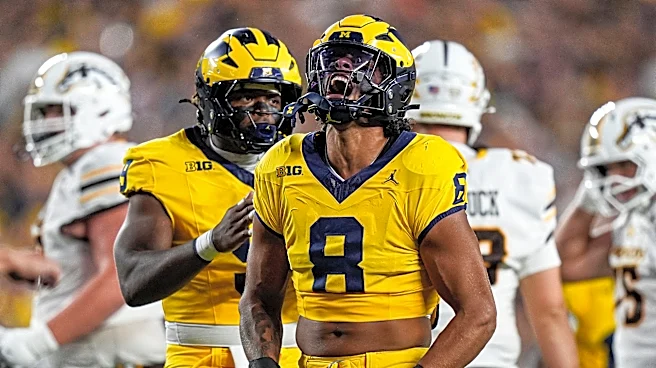
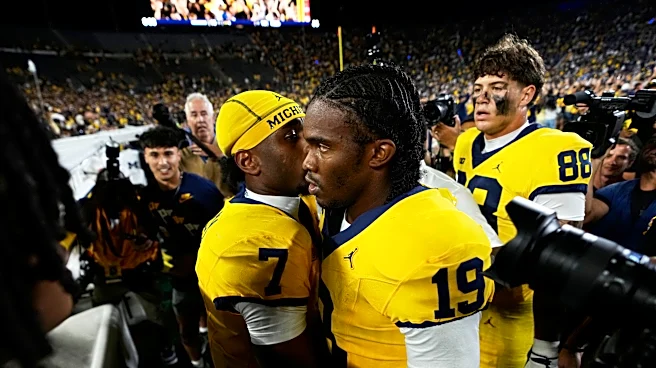
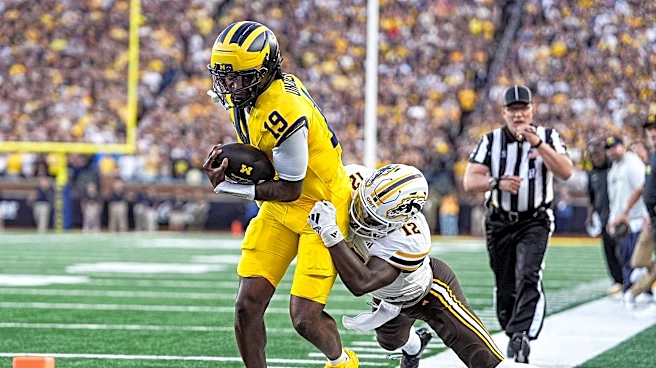
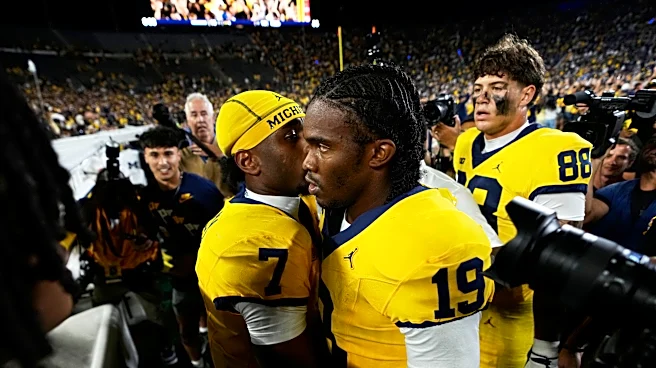
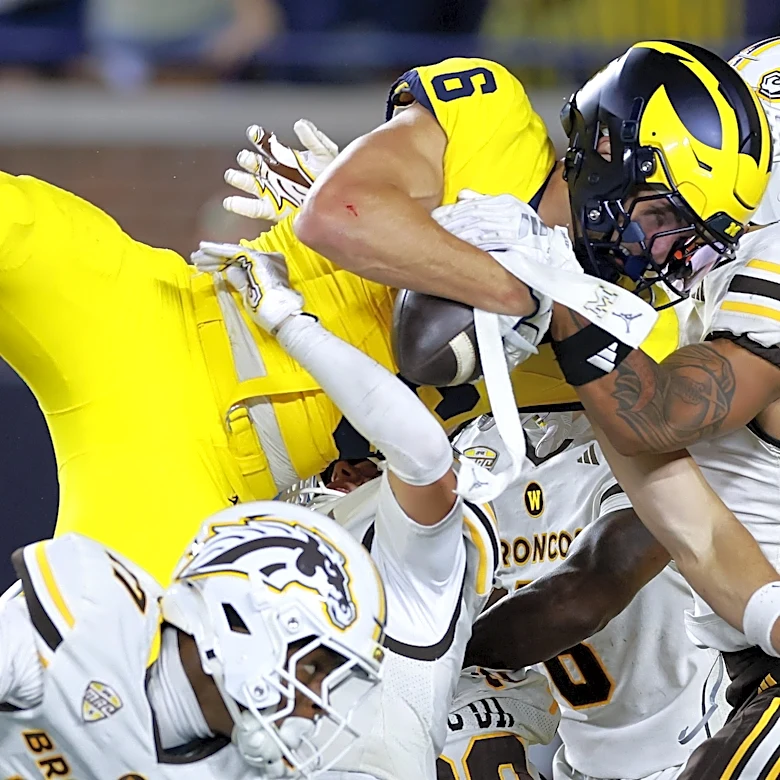
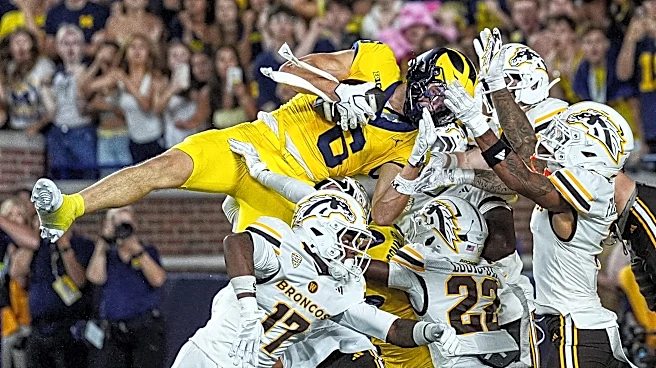
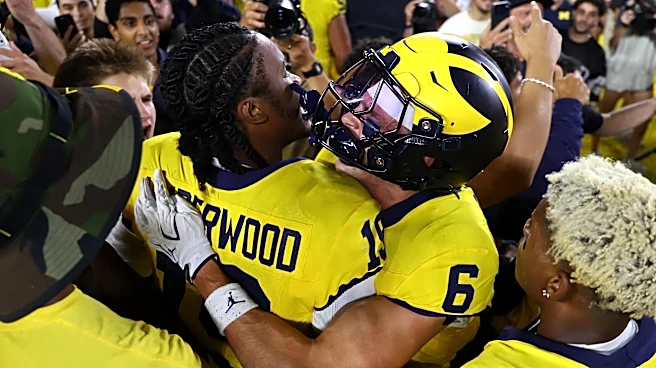
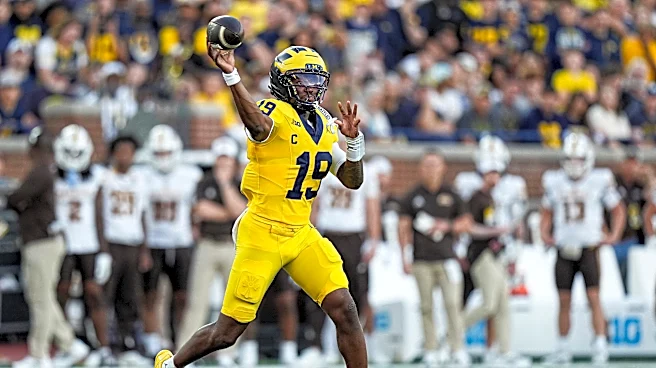
The No. 16 Michigan Wolverines narrowly avoided an upset, defeating Western Michigan 13-12, thanks to a controversial replay decision and a game-winning Hail Mary pass. Initially, it appeared the game had ended with Michigan quarterback Bryce Underwood's
pass sailing out of bounds as the clock hit zero. However, officials reviewed the play and ruled that one second remained on the clock. The Big Ten conference later released a statement and video confirming the decision, citing a rule that stops the clock when a defender touches the ball from an out-of-bounds position. This ruling gave Michigan a second opportunity, which Underwood capitalized on with a 47-yard Hail Mary caught by JJ Buchanan for the winning touchdown. The victory marked coach Kyle Whittingham's debut, but the team expressed dissatisfaction with their performance, with defensive end Dom Nichols stating he felt 'sick to my stomach' about the game.
Why It's Important?
This game highlights the significant impact of replay review technology and officiating decisions in high-stakes college football. The controversial call directly altered the outcome, preventing what coach Whittingham called an 'epic loss' for Michigan. For the Wolverines, a team projected to win by a significant margin, avoiding an early-season upset is crucial for maintaining their national ranking and playoff aspirations. An unexpected loss, especially in such a manner, could have severely damaged team morale and public perception early in the season. For Western Michigan, the decision was a bitter blow, denying them a monumental upset victory. The incident also underscores the ongoing debate about the precision and interpretation of rules in sports, and how technology, while intended to ensure fairness, can sometimes lead to contentious outcomes that overshadow the athletic performance itself.
What's Next?
Following this narrow and disputed victory, No. 16 Michigan faces a significant challenge next week against No. 10 Oklahoma at home. Coach Whittingham acknowledged the need for substantial improvement, stating, 'If we don’t play a lot better, it’s not going to be pretty.' The team will likely focus on addressing the defensive frailties and overall performance issues that made the game against Western Michigan so close. For Western Michigan and the Mid-American Conference, the focus will be on understanding the Big Ten's explanation of the replay decision, though the outcome of the game will stand. The controversy surrounding the replay will likely fuel discussions among fans, analysts, and potentially lead to further scrutiny of officiating protocols in college football.
Beyond the Headlines
The Michigan-Western Michigan game transcends a typical sports outcome, touching upon broader themes of technological influence in sports and the psychological impact of near-defeats. The reliance on replay technology, while aiming for accuracy, introduces a layer of human interpretation that can lead to significant controversy, as seen in this instance. The 'second chance' granted to Michigan, while within the rules as interpreted, raises questions about the spirit of the game and the finality of moments. Furthermore, the team's reaction, despite winning, reveals the psychological toll of underperformance and the pressure to meet high expectations. This event could serve as a case study in sports psychology regarding how teams cope with unexpected challenges and controversial decisions, and how such experiences shape their trajectory through a season, regardless of the final score.