





What's Happening?
Former TNN President Kevin Kay has publicly refuted Paul Heyman's long-standing claim that Vince McMahon made a significant mistake by allowing 'The Ultimate Fighter' (TUF) to air directly after WWE RAW, thereby providing UFC with a massive audience.
Kay, speaking on 'The Ariel Helwani Show,' stated that McMahon did not have the authority to control what Spike TV aired after RAW. According to Kay, the decision to place TUF in that prime slot was entirely Spike TV's, driven by the fact that UFC was self-funding the first season for approximately $10 million due to Spike's depleted programming budget. Kay offered the post-RAW slot as the most valuable lead-in available, a decision that proved highly successful for TUF's viewership growth.
Why It's Important?
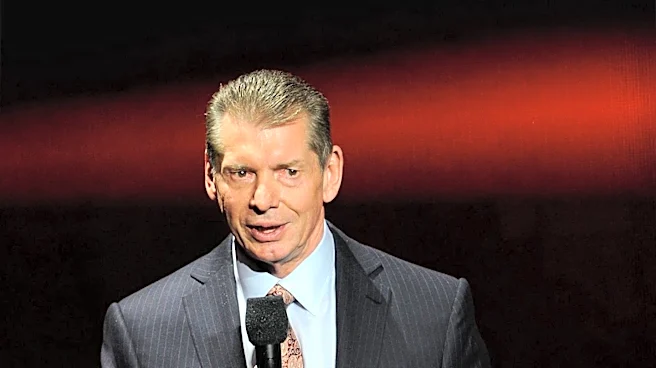
This revelation by Kevin Kay significantly alters a widely accepted narrative within the professional wrestling and mixed martial arts communities regarding the early success of UFC. For years, Vince McMahon has been criticized for inadvertently boosting a rival combat sports promotion. Kay's account clarifies that McMahon lacked the power to prevent TUF from airing after RAW, shifting the responsibility for that strategic programming decision to Spike TV. This re-contextualization is crucial for understanding the historical dynamics between WWE and UFC, and how each promotion navigated its growth. It also highlights the power of television networks in shaping the landscape of sports entertainment, demonstrating that network programming decisions can have profound, long-lasting impacts on the success of content, regardless of the content provider's wishes.
What's Next?
The immediate impact of Kay's statement is a potential re-evaluation of Vince McMahon's historical role in the rise of UFC. While it may not change the outcome of TUF's success, it corrects a long-held misconception about McMahon's agency in that specific situation. This clarification could lead to further discussions among wrestling historians, fans, and industry insiders about other historical narratives and the true extent of influence various figures held. It also underscores the importance of primary sources and direct accounts in understanding complex historical events in sports entertainment. Future analyses of WWE and UFC's intertwined histories will likely incorporate this revised understanding of the programming decision.
Beyond the Headlines
Beyond the specific details of the programming decision, this story touches upon the broader theme of media control and narrative construction. The persistence of Heyman's claim for years, despite its inaccuracy, illustrates how narratives can take hold and become 'truth' within a community, even without full factual basis. It also highlights the competitive nature of media industries, where blame and credit are often assigned based on perceived outcomes rather than actual control. This incident serves as a reminder of the complex interplay between content creators, broadcasters, and the public in shaping historical understanding, and how a single, authoritative voice can challenge and correct long-standing misconceptions, revealing the true power dynamics at play.