





What's Happening?
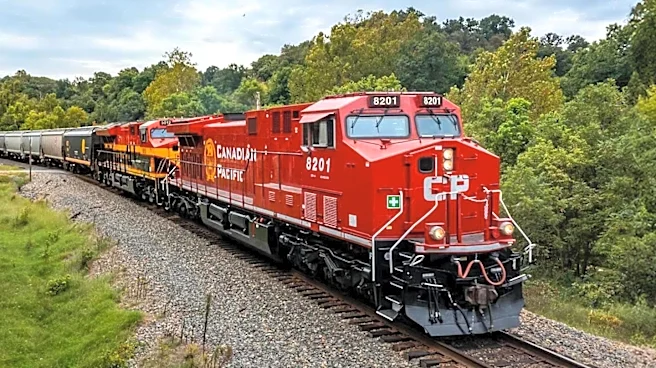
Approximately 200,000 railcars across North America are nearing retirement in the coming years, according to Charley Moore, chief commercial officer at TrinityRail. This significant number of impending retirements is occurring while lease fleets are operating
at utilization rates in the 'high 90s,' indicating limited spare capacity in the market. Industry output for new railcars is projected to reach around 25,000 units in 2026, with an increase to 30,000–35,000 in 2027. However, current production levels are below next year's projections due to factors such as tariff uncertainty and elevated steel input costs, which have caused delays in customers' capital decisions. TrinityRail, which manages a fleet of over 140,000 railcars and manufactures equipment in the U.S. and Mexico, notes that high utilization among public lessors leaves little room to meet demand without additional equipment or faster fleet turnover. The company is exploring its Sustainable Railcar Conversion program, which reuses materials and components from older railcars to manufacture new ones, having already reused over 79 million pounds of raw materials.
Why It's Important?
The impending retirement of a substantial portion of the North American railcar fleet, coupled with constrained new production, poses significant implications for the U.S. industrial economy and supply chains. A tight supply of railcars could lead to increased shipping costs and potential delays for various commodities, impacting sectors reliant on rail transport. The high utilization rates suggest that the existing fleet is already stretched, and the retirement wave could exacerbate capacity issues. This situation could particularly affect industries such as agriculture, energy, and manufacturing, which depend on rail for moving goods across long distances. The discussion around potential railroad mergers, such as the proposed Union Pacific–Norfolk Southern merger, highlights efforts to improve efficiency and transit times, which could partially alleviate some pressure on railcar demand by optimizing existing infrastructure. However, the underlying issue of equipment availability remains critical, potentially driving up lease rates for railcars and influencing investment decisions in new manufacturing capacity.
What's Next?
The rail industry is preparing for a replacement cycle, with new railcar production expected to increase in 2027. TrinityRail is actively working to mitigate manufacturing pressures through automation, changes in domestic sourcing, and supplier negotiations to meet the anticipated rise in demand. The company is also engaged in discussions with U.S. Customs and Border Protection regarding the treatment of Section 232 duties on railcars produced in its Mexican facilities, which could impact the cost and availability of new equipment. Furthermore, the Surface Transportation Board will need to consider rate concerns for captive shippers in the context of potential railroad alignments and mergers, which could reshape the competitive landscape and service offerings. The effectiveness of programs like TrinityRail’s Sustainable Railcar Conversion will be crucial in addressing the retirement wave, though the extent to which it can handle the 200,000 approaching retirements is yet to be fully specified. The market will likely see continued efforts to balance demand with supply through both new production and innovative reuse strategies.
Beyond the Headlines
The challenge of railcar retirements extends beyond immediate logistical concerns, touching upon broader themes of industrial sustainability and economic resilience. The emphasis on reusing railcar materials through programs like TrinityRail's Sustainable Railcar Conversion reflects a growing trend towards circular economy principles within heavy industries. This approach not only addresses the practical need for equipment replacement but also contributes to environmental goals by reducing waste and conserving resources. The geopolitical landscape, including the Russia-Ukraine conflict and instability involving Iran, is also influencing commodity flows and, consequently, railcar demand, underscoring the interconnectedness of global events and domestic infrastructure. Additionally, the increased electricity demand from AI data centers is driving renewed coal demand, which could further strain the rail network and its equipment. This complex interplay of economic, environmental, and geopolitical factors highlights the critical role of robust and adaptable rail infrastructure in supporting the U.S. economy and its evolving needs.