





What's Happening?
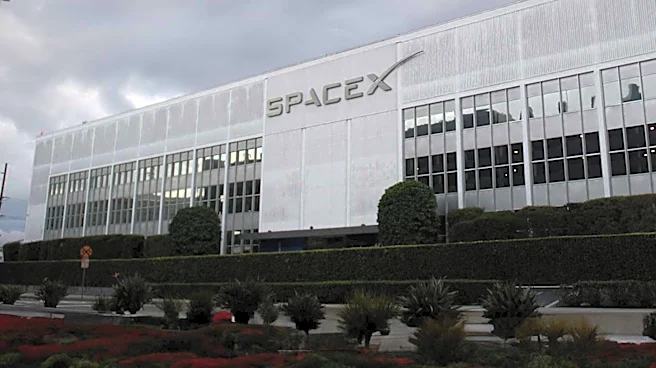
Elon Musk has announced that SpaceX will begin in-house manufacturing of gas turbine blades and vanes to address a critical bottleneck in power generation for AI data centers. This move aims to accelerate the deployment of natural gas turbines by up to 18
months. The decision comes as the AI industry faces significant power grid constraints, with global data center electricity use projected to double by 2030. Currently, only a few companies worldwide can produce the specialized turbine blades required, leading to long lead times and sold-out production capacities through 2030 for major manufacturers like GE Vernova. SpaceX has been secretly building a foundry in Bastrop, Texas, for this purpose, acquiring approximately 830 acres near its existing Starlink factory. This initiative is intended to support both SpaceX and Tesla's efforts to build 100GW/year of solar production capacity, acknowledging that natural gas will be necessary to supplement solar power for several years.
Why It's Important?
This development is significant for the U.S. technology and energy sectors. By bringing turbine blade manufacturing in-house, SpaceX could gain a substantial competitive advantage in the rapidly expanding AI infrastructure market. The ability to bypass the current oligopoly of turbine blade manufacturers would allow Musk's entities, including xAI, to deploy data centers more quickly, potentially solidifying their position in the AI race. However, this accelerated deployment of natural gas turbines also raises environmental concerns. Increased reliance on gas turbines, even as a supplement to solar, contributes to air pollution, including smog-forming compounds and hazardous chemicals. Communities near existing gas turbine facilities, such as those in Memphis and Virginia's 'Data Center Alley,' have already experienced negative health impacts and faced legal battles over emissions. This highlights a growing tension between the demand for rapid technological advancement and environmental protection, particularly in marginalized communities disproportionately affected by industrial pollution.
What's Next?
SpaceX will proceed with its in-house manufacturing of turbine blades and vanes at its new foundry in Bastrop, Texas. The success of this venture could significantly impact the timeline for AI data center expansion across the U.S. Other hyperscalers, including Amazon, Google, Meta, OpenAI, and Microsoft, which are also increasingly relying on natural gas to power their data centers, will likely monitor SpaceX's progress closely. If successful, this could prompt other tech giants to explore similar in-house manufacturing solutions or alternative power generation strategies. Concurrently, environmental advocacy groups and affected communities are expected to continue their efforts to scrutinize and challenge the environmental impact of increased gas turbine usage. Legal actions and public pressure regarding air quality and health concerns are likely to intensify as more gas-powered data centers come online.
Beyond the Headlines
The move by SpaceX to manufacture critical components for gas turbines underscores a broader trend of vertical integration within the tech industry, driven by supply chain vulnerabilities and the intense demand for AI infrastructure. This strategy not only aims to mitigate external dependencies but also to control the pace of innovation and deployment. The ethical implications of prioritizing rapid AI development over immediate environmental and public health concerns are profound. While Musk frames natural gas as a temporary necessity to 'bootstrap solar,' the long-term commitment to such infrastructure could lock in fossil fuel reliance for decades. This situation highlights the complex trade-offs involved in technological progress, where the pursuit of advanced computing power can exacerbate existing environmental injustices and health disparities, particularly in communities already burdened by pollution. The ability of a single company to overcome a highly specialized manufacturing bottleneck could reshape industrial landscapes and regulatory discussions around energy, technology, and environmental policy.