








What's Happening?
Alimmenta has released a 7-day ovo-lacto-vegetarian menu designed for weight loss, emphasizing balanced nutrition rather than strict calorie restriction. The menu includes eggs and dairy products and serves as an example for adults without specific clinical
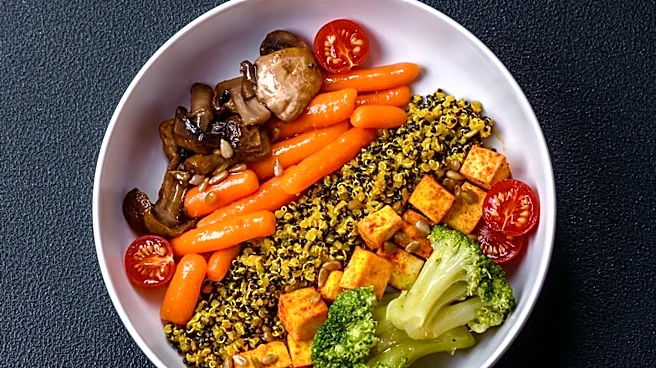
needs, with quantities needing individual adaptation. The plan focuses on incorporating protein sources like pulses, tofu, tempeh, eggs, and dairy into meals. Sample daily meals include breakfast options like bread with tomato and semi-skimmed milk, or oats with semi-skimmed milk and banana. Lunches feature dishes such as lentils with carrot, spinach, and rice, or wholewheat pasta with textured soy and aubergine. Dinners include tofu with broccoli and mushrooms, or a two-egg omelette with courgette. The guide also addresses common concerns like the role of carbohydrates, the importance of protein for satiety, and how to manage meals when eating out.
Why It's Important?
This vegetarian weight loss menu is significant for individuals in the U.S. seeking structured guidance for plant-based eating while managing their weight. It addresses the common misconception that vegetarianism automatically leads to weight loss, instead emphasizing the importance of balanced meal planning and appropriate portion sizes. By providing a clear, week-long framework, Alimmenta helps demystify vegetarian weight management, making it more accessible and sustainable. This resource supports the growing trend of plant-based diets by offering practical tools, potentially influencing dietary habits and contributing to public health by promoting well-rounded, nutrient-dense eating patterns. It also highlights the need for personalized nutritional advice, moving beyond generic diet plans.
What's Next?
As interest in vegetarian and vegan diets for health and weight management continues to grow, we can expect to see more detailed and personalized meal plans from nutrition experts and health platforms. There will likely be an increased focus on integrating such plans with digital health tools, such as apps for meal tracking and personalized recommendations. Educational content will probably expand to cover specific nutritional needs within vegetarian diets, like B12 supplementation, and how to adapt menus for various lifestyles and health conditions. The trend will also push food manufacturers to offer more convenient, pre-portioned vegetarian and vegan meal components that align with structured dietary plans.
Beyond the Headlines
The provision of structured vegetarian weight loss menus reflects a broader societal shift towards proactive health management through diet. It underscores the increasing recognition that plant-based diets, when well-planned, can be effective for weight control and overall well-being. This development also challenges the often-simplistic view of weight loss, emphasizing holistic approaches that consider satiety, nutrient balance, and individual circumstances rather than just calorie restriction. Culturally, it contributes to the mainstream acceptance of vegetarianism as a viable and healthy lifestyle choice, moving it beyond niche status. Long-term, this could lead to a more informed public that understands the nuances of plant-based nutrition and its role in sustainable health.