



What's Happening?
Interior designers and home staging consultants are emphasizing the importance of layered lighting in home decor to create a cozy and immersive atmosphere, moving away from reliance on single overhead fixtures. Experts like Libby Fehsenfeld of Tralala
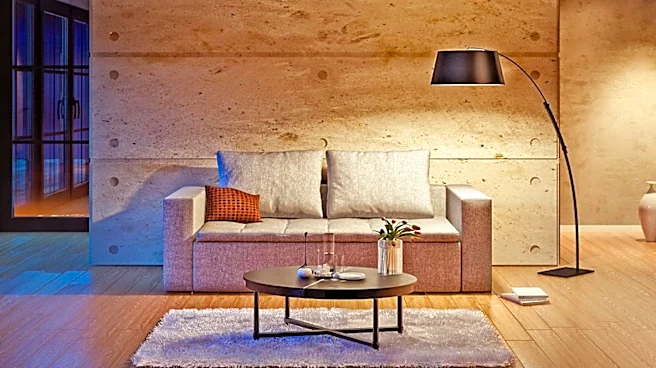
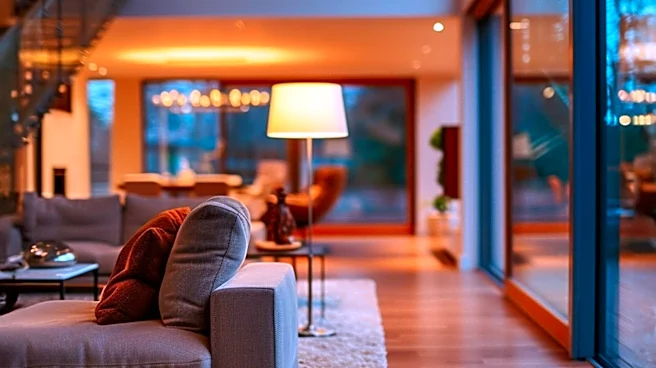
Interiors recommend using at least three light sources in every room, including floor lamps, table lamps, and wall lamps, to avoid a sterile feel. Alyssa Anselmo, an interior architect, suggests that lighting should guide movement through a space cinematically, creating rhythm and intimacy. The approach involves distributing fixtures at different heights to mimic natural sunlight and create visual texture. Additionally, designers advise maintaining the same color temperature across all light sources within a room to prevent a chaotic appearance, with 2200K suggested for a moody ambiance and 2700K for a brighter feel. This strategy aims to make spaces feel as if they are glowing from within rather than being flooded by light from above.
Why It's Important?
This shift in home lighting philosophy has significant implications for the interior design and home furnishings industries in the U.S. Consumers are being encouraged to invest in multiple lighting fixtures per room, potentially boosting sales for manufacturers and retailers of floor lamps, table lamps, wall sconces, and other accent lighting. The emphasis on specific color temperatures also highlights a growing market for smart lighting solutions and bulbs that offer adjustable warmth. For homeowners, adopting layered lighting can transform living spaces, enhancing comfort and aesthetic appeal, which can contribute to overall well-being and satisfaction with their homes. This trend also underscores a broader movement towards more personalized and intentional home environments, moving away from generic, brightly lit spaces to more nuanced and inviting settings. The advice to avoid mixing color temperatures also points to a need for greater consumer education on lighting specifications.
What's Next?
The trend towards layered and mood-enhancing lighting is likely to continue influencing product development in the home lighting sector. Manufacturers may focus on creating more aesthetically diverse and technologically advanced lighting options, including smart bulbs with tunable white and color-changing capabilities. Retailers will likely adjust their merchandising strategies to showcase layered lighting concepts, offering curated collections of complementary fixtures. Interior designers and home staging professionals will continue to integrate these principles into their recommendations, further solidifying layered lighting as a standard practice in modern home design. Educational content for consumers on selecting appropriate light sources, understanding color temperatures, and implementing layered lighting schemes is also expected to increase, empowering more homeowners to adopt these design principles.
Beyond the Headlines
Beyond the immediate impact on sales and design trends, the emphasis on mood lighting reflects a deeper cultural shift towards creating more mindful and sensory-rich living environments. In an increasingly digital and fast-paced world, there's a growing desire for homes to serve as sanctuaries that promote relaxation and emotional well-being. Lighting, with its profound effect on mood and perception, plays a crucial role in achieving this. The move away from harsh overhead lighting towards softer, more distributed illumination can be seen as a rejection of purely functional design in favor of an approach that prioritizes human experience and comfort. This trend also subtly encourages a more conscious consumption of energy, as layered lighting often involves using lower-wattage bulbs in multiple fixtures, potentially leading to more energy-efficient lighting solutions in the long run, especially with the prevalence of LED technology.