






What's Happening?
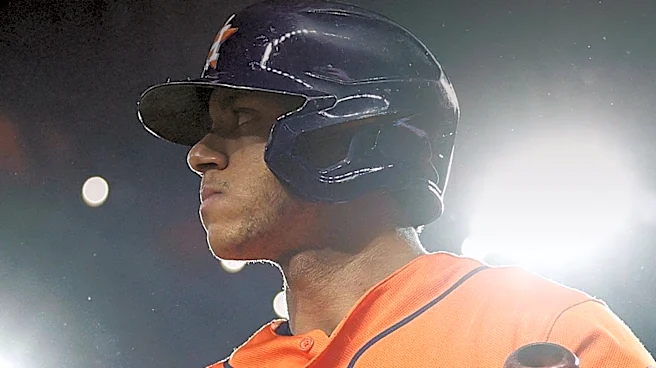
The Houston Astros organization is approaching a critical decision regarding the future of their shortstop, Jeremy Peña. Peña is currently arbitration-eligible through the 2027 season, after which he will be seeking a significant long-term contract. Joel
Reuter of Bleacher Report has identified Peña as a potential candidate for a $200 million contract, citing the high demand for quality shortstops in a thin market. While Peña's offensive statistics over the past two seasons—a .291/.345/.477 line and a 130 OPS+ despite injury setbacks—demonstrate his value, the team must weigh whether to commit to such a substantial deal or explore trade options to acquire other assets. The decision is further complicated by the presence of Scott Boras as Peña's agent, known for guiding clients to free agency to maximize their earning potential through bidding wars.
Why It's Important?
This decision holds significant implications for the Houston Astros' long-term roster construction and competitive window. Securing Peña, alongside Yordan Alvarez, could establish a new core for the team, potentially extending their championship contention as veteran players like Jose Altuve and Carlos Correa age. Conversely, failing to retain Peña could leave a void at a crucial defensive and offensive position, necessitating a search for a replacement in a competitive market. The financial commitment of a $200 million contract would also impact the team's overall payroll flexibility, influencing future player acquisitions and extensions. The outcome could set a precedent for how the Astros manage their star players' contracts, especially those represented by high-profile agents, and could influence player valuations across Major League Baseball.
What's Next?
The Astros' new general manager will be tasked with navigating this complex situation. The immediate next steps involve internal discussions and evaluations of Peña's long-term value to the team, considering both his on-field performance and the financial implications of a potential $200 million contract. The possibility of a lockout in Major League Baseball and any potential changes to salary cap structures could also influence the timing and nature of negotiations. If the Astros decide against offering a long-term extension, they would likely explore trade scenarios to acquire prospects or established players to bolster other areas of the team. Conversely, if they commit to Peña, negotiations with Scott Boras would commence, potentially leading to a pre-free agency extension or a high-stakes bidding war once Peña hits the open market.
Beyond the Headlines
Beyond the immediate contract negotiations, this situation highlights broader trends in professional sports, particularly the escalating value of premium positions like shortstop in MLB. The 'thin market' for quality shortstops, as noted by Joel Reuter, underscores how supply and demand dynamics can drive player salaries to unprecedented levels. The involvement of agents like Scott Boras also emphasizes the strategic complexities of player contracts, where agents often prioritize maximizing client earnings through free agency, potentially creating challenges for teams aiming to secure players long-term. This scenario also touches upon the ongoing debate about team loyalty versus player earning potential, and how teams balance maintaining a competitive roster with financial prudence in an era of increasingly lucrative player contracts.