





What's Happening?
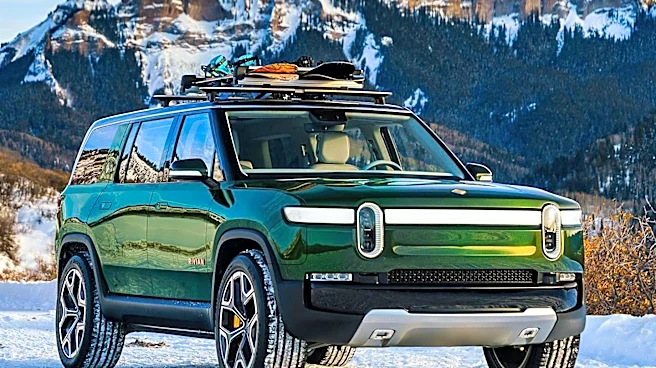
A production Rivian R1S, an all-electric sport utility vehicle, has been converted into a specialized camera car capable of 360-degree rotations at speeds exceeding 100 miles per hour. This innovative vehicle is the result of a year-long collaboration
between Rivian and Motion State, a Pacific Northwest production company. Motion State describes it as the first factory-built arm car, designed to film other vehicles in motion. The R1S camera car features a gyro-stabilized crane arm, which can complete a full 360-degree rotation in 5.5 seconds and lift through its full range in under two seconds. The vehicle itself is a dual-motor R1S, rated at 650 horsepower with regenerative braking and electronically limited to 110 miles per hour. It also boasts adaptive air suspension, all-terrain tires, and 14.9 inches of adjustable ground clearance. The cabin is configured to seat six crew members, including a precision driver, arm operator, director of photography, and first assistant camera, with hands-free open-mic communication. A custom drone station is integrated into the frunk, allowing for seamless transitions between ground tracking and aerial work.
Why It's Important?
The development of an electric arm car, such as the Rivian R1S, marks a significant advancement in film production technology, particularly for automotive and action sequences. Traditional internal-combustion engine camera vehicles introduce noise, vibration, and exhaust fumes, which can compromise footage quality and necessitate extensive post-production work. The electric platform of the R1S eliminates these issues, providing silent operation, reduced vibrations, and zero emissions, leading to cleaner and more efficient filming. The instant torque of the electric vehicle is also crucial for precisely matching the acceleration profiles of 'hero cars' from a standing start, ensuring dynamic and smooth tracking shots. This innovation not only enhances the technical capabilities of film production but also aligns with growing industry trends towards sustainable and environmentally friendly practices. The R1S camera car is available for rent to various productions, including Rivian's own advertising campaigns, demonstrating its commercial viability and impact on the broader film and advertising sectors.
What's Next?
The Rivian R1S camera car is currently operational and available for rent through Motion State, indicating its immediate application in film and commercial productions. Its use in Rivian's own advertising campaigns suggests a continued integration into the company's marketing efforts. The success of this electric arm car could pave the way for further innovations in specialized electric vehicles for various industries, potentially inspiring other automotive manufacturers to explore similar applications. The project also highlights Rivian's internal performance group, the Rivian Adventure Department (RAD), which focuses on pushing the boundaries of what their vehicles can achieve. This department's ongoing work, including taking vehicles to extreme environments and setting records, suggests a continuous effort to develop and showcase the capabilities of Rivian's electric platform, which may lead to more specialized vehicle adaptations in the future.
Beyond the Headlines
This collaboration between Rivian and Motion State extends beyond a mere technical achievement; it represents a convergence of automotive innovation and creative industries. The R1S camera car embodies a shift towards more sustainable and technologically advanced solutions in film production, reflecting broader societal values concerning environmental impact. The ability to capture high-quality, dynamic footage without the environmental and operational drawbacks of traditional vehicles could set new industry standards. Furthermore, the project underscores the versatility of electric vehicle platforms, demonstrating that their benefits—such as instant torque and quiet operation—are not limited to consumer driving but can be leveraged for highly specialized professional applications. This development could also influence how other electric vehicle manufacturers approach product development, encouraging them to consider niche markets and specialized adaptations that showcase the full potential of electric propulsion.