





What's Happening?
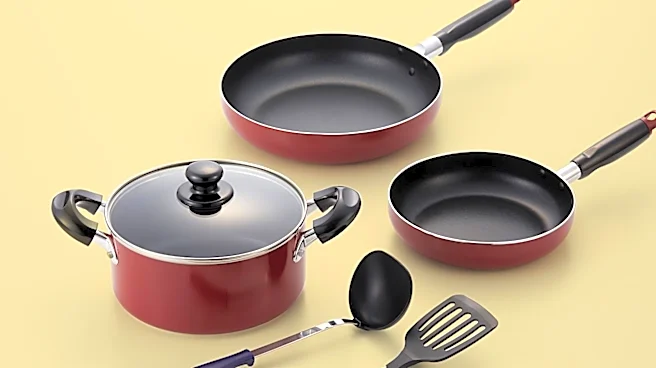
Recent evaluations of ceramic nonstick pans have raised concerns about their performance and potential health implications. Despite initial nonstick properties, these pans often degrade quickly, losing their effectiveness after limited use. The report
highlights that ceramic coatings, unlike PFAS-based coatings, do not maintain their nonstick quality over time. Additionally, the lack of transparency regarding the materials used in ceramic coatings raises questions about their safety. While PFAS chemicals, known for their durability, are being phased out due to health concerns, ceramic alternatives have not proven to be a reliable substitute.
Why It's Important?
The shift away from PFAS-coated cookware is driven by health concerns, as these chemicals are linked to various health risks. However, the search for safer alternatives like ceramic nonstick pans has not yielded satisfactory results. Consumers seeking nonstick cookware face a dilemma: choosing between potentially harmful PFAS-coated pans and less effective ceramic options. This situation underscores the need for innovation in cookware materials that balance safety and performance. The cookware industry must address these challenges to meet consumer demands for both health-conscious and functional kitchen products.
What's Next?
As the demand for safer cookware continues, manufacturers may invest in research and development to create new materials that offer both nonstick properties and health safety. Regulatory bodies might also increase scrutiny on cookware materials, pushing for greater transparency and safety standards. Consumers are likely to remain cautious, potentially shifting towards traditional cookware options like cast iron or stainless steel until more reliable nonstick alternatives are available. The ongoing debate over cookware safety could influence purchasing trends and drive industry changes.