
What's Happening?
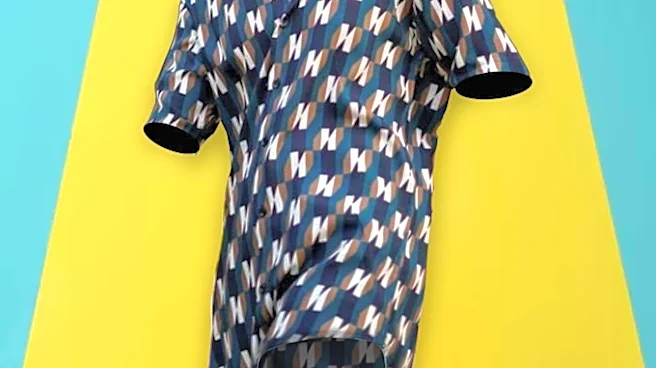
FashionINSTA has launched an enterprise-grade AI-powered sketch-to-pattern and pattern intelligence platform designed for established fashion brands. This platform aims to streamline the entire product
development pipeline, from initial design generation to production costing and market research. Unlike generic AI tools, FashionINSTA learns from a brand's proprietary .DXF pattern library within a closed, tenant-isolated environment, ensuring data security and brand-specific adaptation. The system generates AI visuals driven by garment geometry, meaning what is seen on the platform can be produced as a real garment. Its 'Fashion Nodes' workflow builder includes specialized AI for design, fabric intelligence, production costing, and market research, improving through team feedback without data pooling or cross-customer training. This approach addresses the challenge of maintaining brand fit consistency and construction identity as fashion teams grow and product lines expand, a common issue when scaling to hundreds of SKUs per season.
Why It's Important?
This development is significant for the U.S. fashion industry as it tackles critical inefficiencies and challenges faced by established brands. The ability to generate production-ready .DXF patterns up to 70% faster than traditional digitizing can drastically reduce development cycles and time-to-market. By encoding a brand's fit DNA and institutional pattern knowledge into the AI, FashionINSTA helps prevent the erosion of brand identity and construction consistency, which often occurs with staff turnover or rapid expansion. This technology also offers a solution to the 'pattern-knowledge crisis,' where valuable expertise is lost when experienced pattern makers leave. Furthermore, the platform's focus on production-ready assets, rather than just visual concepts, means that AI-generated designs can directly translate into tangible products, allowing brands to test market viability with realistic imagery before committing to physical production. This can lead to reduced waste, more informed decision-making, and improved profitability in a highly competitive market.
What's Next?
Established fashion brands are encouraged to explore proof-of-concept deployments with FashionINSTA to assess its capabilities using their own pattern archives. Over 1,500 fashion professionals have already joined a waitlist, indicating a strong industry interest in adopting such advanced AI solutions. The platform's compatibility with existing CAD software means it can integrate into current pipelines without requiring a complete overhaul of infrastructure. The future will likely see a continued shift towards AI-driven product development, with brands leveraging these tools to enhance agility, reduce costs, and maintain brand integrity. The emphasis will be on how effectively organizations can integrate these technologies into their operating models and address cultural shifts required for successful adoption, moving away from rigid seasonal processes towards more responsive, learning-driven approaches. This will involve defining clear decision rights for AI-supported outcomes and ensuring human accountability.
Beyond the Headlines
The introduction of FashionINSTA highlights a broader trend in the fashion industry: the move towards intelligent automation that not only speeds up processes but also preserves and enhances a brand's unique identity. This technology raises important questions about the future of design and manufacturing, particularly regarding the balance between human creativity and AI-driven efficiency. By learning from a brand's own data, the AI becomes a digital repository of institutional knowledge, potentially safeguarding against the loss of expertise due to workforce changes. This could lead to a redefinition of roles within design and production teams, with a greater focus on strategic oversight and creative direction, while repetitive or data-intensive tasks are handled by AI. The tenant-isolated learning model also sets a precedent for data security and intellectual property protection in an era where AI training often involves shared data, addressing a critical concern for brands with proprietary designs.