




What's Happening?
The 1960s was a transformative decade for literature, marked by significant political and social upheaval. This period saw the publication of several influential books that captured the era's anxieties, ambitions, and imagination. Notable works include
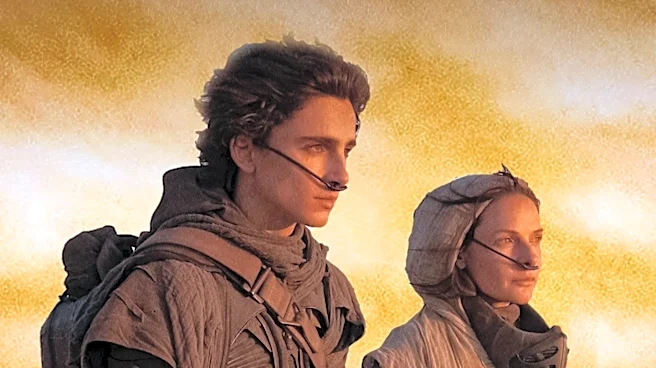
'To Kill a Mockingbird' by Harper Lee, which won the Pulitzer Prize and was adapted into a film starring Gregory Peck. Robert Heinlein's 'Stranger in a Strange Land' introduced the term 'grok' and explored 'future history.' Kurt Vonnegut's 'Slaughterhouse-Five' addressed the devastation of war, resonating with those affected by the Vietnam War and World War II. Joan Didion's 'Slouching Toward Bethlehem' offered incisive essays that defined the era. Other significant works include Ken Kesey's 'One Flew Over the Cuckoo's Nest,' Betty Friedan's 'The Feminine Mystique,' and Frank Herbert's 'Dune.' These books, among others, challenged authority, experimented with form, and explored themes of identity, technology, and social change.
Why It's Important?
The literature of the 1960s played a crucial role in reflecting and shaping the cultural and political landscape of the time. Books like 'To Kill a Mockingbird' and 'The Feminine Mystique' addressed issues of racial injustice and gender roles, contributing to the civil rights and women's liberation movements. The exploration of war and its impacts in 'Slaughterhouse-Five' and 'Catch-22' provided a critical lens on military conflicts, influencing public perception during the Vietnam War. These works not only entertained but also provoked thought and discussion, encouraging readers to question societal norms and consider new perspectives. The decade's literature continues to influence contemporary writers and remains relevant in discussions about social justice, identity, and human rights.