



What's Happening?
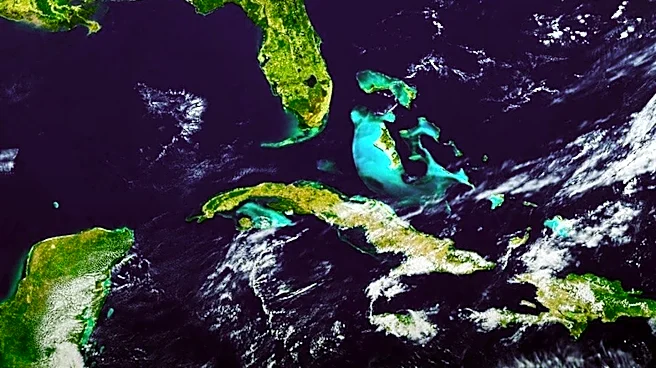
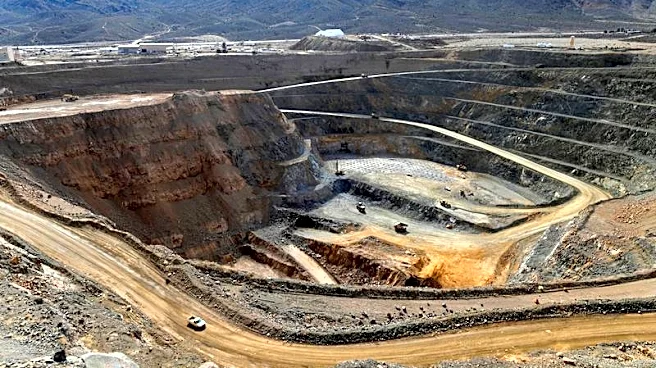
The Dominican Republic is aiming to declare its first rare-earth reserves in the first half of 2027, following an expected resource estimate in November 2026. This development is based on the analysis of over 5,000 samples from the Ávila Fiscal Mining
Reserve in Pedernales. A new U.S.-Dominican critical-minerals framework is supporting this initiative, extending beyond extraction to include separation and processing, with potential for loans, equity, offtakes, and insurance. The European Union and the University of Barcelona are also co-funding a €538,709 characterization program for rare earths, gallium, and scandium in Ávila's karst bauxites. Empresa Minera Dominicana (EMIDOM), the state mining company created in 2024, is the primary commercial vehicle for managing Ávila and engaging with international partners. While the geology shows promise, the commercial viability still needs to be proven through metallurgy, economics, logistics, and environmental assessments.
Why It's Important?
This initiative is highly significant for the U.S. and its efforts to diversify critical mineral supply chains away from dominant foreign sources, particularly China. By establishing a rare-earth supply node in the Caribbean, the U.S. aims to enhance its economic security and reduce strategic vulnerabilities in key industries like defense, renewable energy, and advanced technology. The bilateral framework, which includes support for downstream processing, is crucial because it addresses the entire supply chain, ensuring that extracted minerals can be processed into usable forms within allied jurisdictions. This can lead to increased investment in the Dominican Republic's mining sector, fostering economic development and job creation. For U.S. industries, a secure and geographically proximate source of rare earths can stabilize input costs, improve manufacturing resilience, and support innovation. The involvement of the EU also highlights a broader Western alliance effort to secure critical mineral supplies, underscoring the global strategic importance of this project.
What's Next?
The immediate next step is the release of the resource estimate in November 2026, which will provide a clearer picture of the Ávila project's potential. Following this, the focus will be on proving the commercial viability through detailed metallurgical studies, economic assessments, and environmental impact analyses. EMIDOM will play a central role in engaging with international partners and securing the necessary contracts and alliances for development. The U.S. and EU are expected to continue their support through financial mechanisms and technical expertise. The success of the Ávila project could serve as a model for future critical mineral partnerships in Latin America and the Caribbean, further strengthening Western supply chains. However, the transition from exploration asset to a viable mine will depend on overcoming technical and economic challenges.
Beyond the Headlines
The Dominican Republic's rare-earth project, backed by the U.S. and EU, represents a strategic pivot in global resource geopolitics. It signifies a concerted effort by Western powers to de-risk their supply chains and counter the influence of nations that currently dominate critical mineral production. This initiative is not merely about mining; it's about establishing a resilient, integrated supply chain that includes extraction, separation, and processing, thereby creating a more robust and secure industrial base. The project also highlights the growing importance of Latin America and the Caribbean as a region for strategic resource development, potentially transforming local economies and fostering new geopolitical alignments. The ethical and environmental considerations of mining, particularly in developing nations, will be a critical aspect to monitor, as responsible development is essential for the long-term success and legitimacy of such ventures. This project could set a precedent for how resource-rich developing countries can leverage their assets for economic growth while contributing to global strategic objectives.