






What's Happening?
NuScale Power, a U.S.-based energy firm and the first to receive U.S. Nuclear Regulatory Commission (NRC) approval for its small modular reactor (SMR) design, has entered into an agreement with South Korean heavy engineering company Doosan Enerbility.
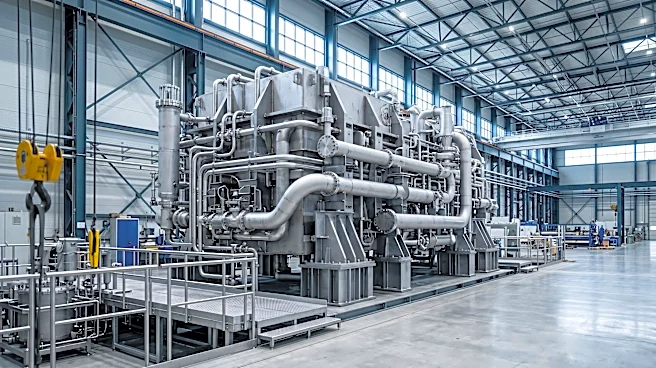
This partnership focuses on sourcing the upper reactor coolant system (URCS) for NuScale's commercial-scale reactors. The collaboration, which began in 2019, aims to strengthen the supply chain and facilitate the development and production of NuScale's power modules. The URCS is a critical component of the reactor pressure vessel, responsible for containing the coolant under high temperature and pressure. This agreement marks a significant step in transitioning SMR technology from technical validation to actual manufacturing, with Doosan Enerbility leveraging its extensive experience in nuclear manufacturing to support NuScale's commercial projects.
Why It's Important?
This partnership is crucial for the commercialization and deployment of SMR technology in the U.S. and globally. NuScale Power's ability to secure a manufacturing partner like Doosan Enerbility, known for its nuclear manufacturing expertise, addresses a key challenge in scaling SMR production: ensuring a robust and reliable supply chain. For the U.S., this collaboration supports the advancement of domestic nuclear energy capabilities and contributes to the broader goal of achieving a low-carbon energy future. The modular, factory-built nature of SMR components, as facilitated by this agreement, is expected to reduce construction times and costs, making nuclear power a more competitive option. This move also highlights the international cooperation necessary to bring advanced nuclear technologies to market, benefiting both U.S. energy security and global clean energy efforts.
What's Next?
The immediate next step involves Doosan Enerbility commencing the manufacturing of the URCS for NuScale's reactor modules and scaling up production. This manufacturing phase is critical for NuScale's ongoing projects, including its first commercial-scale plant in Romania, which will feature six of its uprated nuclear reactor modules. The success of this manufacturing partnership will be a key indicator for future SMR deployments and could influence other SMR developers to seek similar strategic alliances for component sourcing. As SMR technology progresses from validation to commercial reality, the focus will shift towards efficient production, timely delivery, and successful integration of these advanced components into operational plants. This collaboration could also set a precedent for how U.S. SMR developers engage with international partners to accelerate deployment.
Beyond the Headlines
This agreement underscores a broader trend in the nuclear industry: the shift towards modularity and international supply chains to overcome historical challenges of cost overruns and project delays associated with large-scale nuclear power plants. By outsourcing specialized manufacturing to experienced international partners, U.S. SMR developers can potentially accelerate their deployment timelines and reduce financial risks. This approach could also foster a more interconnected global nuclear industry, where different countries specialize in various aspects of SMR development and manufacturing. The long-term implications include a more diversified and resilient global energy supply, with SMRs playing a significant role in providing on-demand, carbon-free electricity. This could also lead to a re-evaluation of nuclear energy's role in national energy policies, particularly as demand for clean energy continues to grow.