




What's Happening?
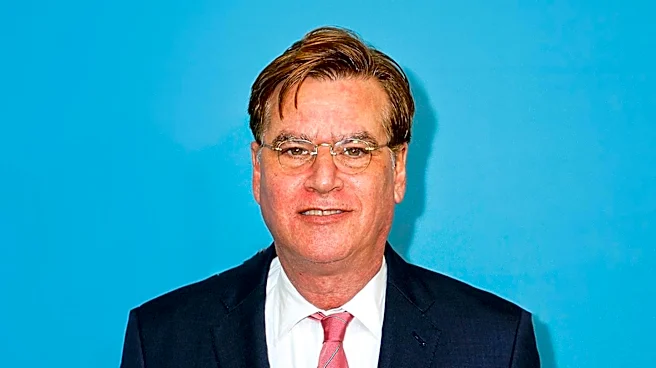
The film "The Social Reckoning," a follow-up to 2010's "The Social Network," has been released to a lukewarm reception, with critics noting its inability to match the predecessor's impact. Directed by Aaron Sorkin, the movie features Oscar-winner Mikey
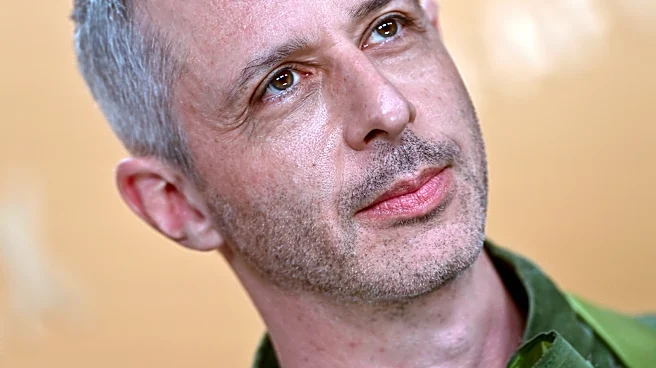
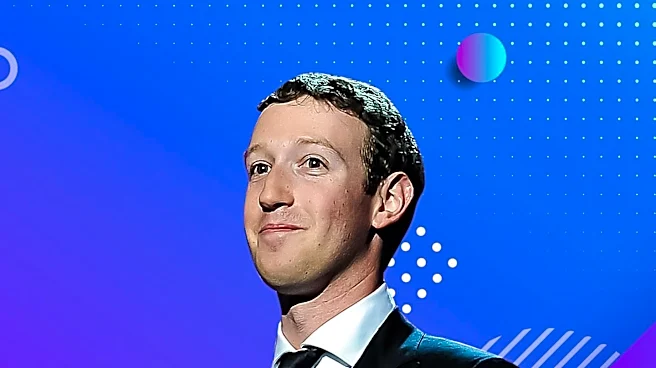
Madison and Oscar nominees Jeremy Strong and Wunmi Mosaku. The plot introduces Frances Haugen (Madison), a data engineer on Facebook’s Civic Integrity team, who discovers the platform prioritizes revenue and interaction over user safety. She attempts to bring these concerns to Teddy Marks (Billy Magnussen), whose character is underutilized. Jeremy Strong's portrayal of Mark Zuckerberg is described as a caricature, lacking the depth seen in Jesse Eisenberg's earlier performance. The film's opening scene, depicting a woman accosted by police with racist statements, is criticized for not aligning with the expected Facebook-centric narrative, failing to engage the audience from the outset.
Why It's Important?
The critical reception of "The Social Reckoning" highlights the challenges of creating impactful sequels, especially when the original film, "The Social Network," set a high bar for storytelling and character development. For the entertainment industry, this review underscores the importance of a cohesive narrative and strong character portrayals, even with a talented cast and acclaimed director. The film's premise, focusing on Facebook's ethical dilemmas regarding user safety versus revenue, touches upon significant societal concerns about social media's influence. A more compelling execution could have further fueled public discourse on corporate responsibility in the tech sector. The movie's perceived shortcomings may influence future projects attempting to tackle complex contemporary issues, emphasizing the need for a clear and consistent thematic focus to resonate with audiences.
What's Next?
The critical assessment of "The Social Reckoning" suggests that its commercial performance might be impacted by the negative reviews, potentially leading to lower box office numbers or streaming viewership compared to initial expectations. For the cast and crew, particularly director Aaron Sorkin, this reception could influence their next projects, prompting a re-evaluation of creative approaches to sequels or adaptations of real-world events. The film's exploration of Facebook's internal conflicts, despite its narrative flaws, may still contribute to ongoing public conversations about social media regulation and corporate ethics. Future films addressing similar themes will likely be scrutinized against the backdrop of both "The Social Network" and "The Social Reckoning," with a greater emphasis on narrative coherence and character authenticity.
Beyond the Headlines
The film's struggle to maintain a consistent thematic focus, oscillating between social media's dangers, hate speech, politics, and the state of journalism, points to a broader challenge in contemporary storytelling: effectively dissecting multifaceted societal issues within a single narrative. This reflects the complexity of modern problems, where various elements are interconnected. The critique of Jeremy Strong's portrayal of Mark Zuckerberg as a caricature, contrasting with Jesse Eisenberg's nuanced performance, raises questions about the evolving public perception and artistic interpretation of iconic tech figures. It also highlights the difficulty in portraying real-life personalities without resorting to oversimplification. Ultimately, the film's reception may serve as a case study for filmmakers on the delicate balance required to adapt complex, real-world narratives into compelling cinematic experiences.