






What's Happening?
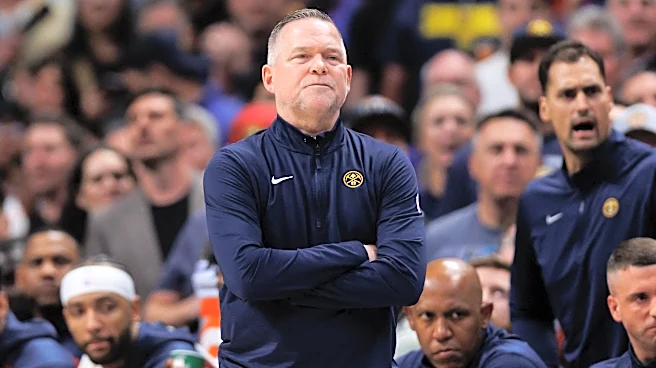
Denver Nuggets head coach David Adelman has expressed confidence in Nikola Jokic despite what some perceive as a dip in his early-season performance. Adelman dismissed concerns, stating that a six-game sample size is insufficient to judge a player of
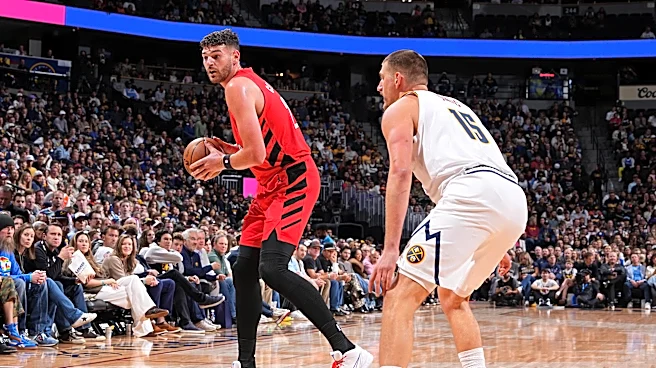
Jokic's caliber, whom he described as "one of the most efficient offensive basketball players that's ever lived." This comes after a game where the Nuggets lost to the Portland Trail Blazers, largely due to being outrebounded significantly (53-37), including 21 offensive rebounds for Portland. Jokic himself acknowledged the team's collective effort in rebounding, starting with himself, despite putting up 26 points, 9 rebounds, and 8 assists in the game. Fans and analysts have noted a slight decrease in Jokic's usual dominant rebounding numbers and offensive aggression, with his field goal percentage, three-point percentage, and free throw attempts all down compared to previous seasons.
Why It's Important?
This situation is important for the Denver Nuggets as they navigate the early part of the NBA season. Nikola Jokic is a cornerstone of their team, and any perceived decline in his performance, even if temporary, can impact team dynamics and fan expectations. The coach's public support aims to stabilize confidence within the team and among supporters, preventing premature panic. If Jokic's numbers continue to trend downwards, it could force the Nuggets to re-evaluate their offensive strategies and potentially seek more aggressive contributions from other players. The emphasis on rebounding, a key aspect of Jokic's game, highlights a fundamental area where the team needs to improve to secure wins, especially against strong opponents. The team's ability to adapt and for Jokic to regain his peak form will be crucial for their playoff aspirations.
What's Next?
The Denver Nuggets will likely continue to monitor Nikola Jokic's performance closely in the coming games, though coach David Adelman has indicated no immediate concern. The team will focus on improving their collective rebounding efforts, an issue Adelman explicitly mentioned as frustrating. Other players on the Nuggets roster may be encouraged to step up and become more aggressive playmakers to alleviate some of the pressure on Jokic, particularly if his offensive aggression remains subdued. The team's long-term strategy for the playoffs, still months away, will depend on how effectively they can integrate these adjustments and how quickly Jokic can return to his customary dominant form. Fans will be watching for a "reminder game" from Jokic, where he reasserts his statistical dominance.
Beyond the Headlines
The discussion around Nikola Jokic's early-season performance touches upon the broader psychological and strategic challenges faced by elite athletes and their teams. Even players considered among the greatest can experience fluctuations in form, leading to intense scrutiny. Adelman's steadfast defense of Jokic underscores the importance of coaching leadership in maintaining team morale and focus amidst external pressures. It also highlights the delicate balance between individual performance and team success, where a single player's perceived dip can trigger wider concerns about team aggression and overall strategy. The narrative also subtly explores the concept of 'superpowers' in sports, suggesting that even the most exceptional talents are not immune to wear and tear, prompting questions about sustainability and adaptation in professional sports.