





What's Happening?
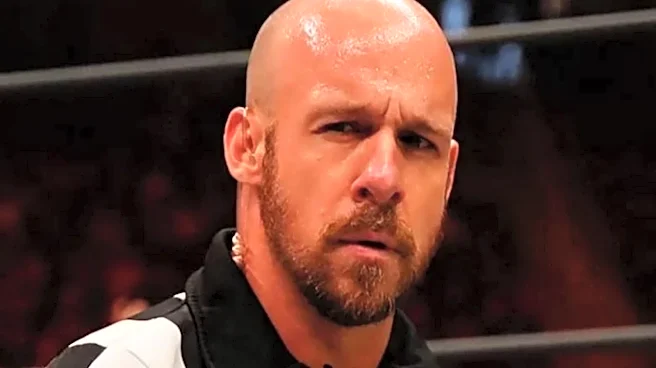
Bryce Remsburg, a constant presence in AEW's referee core since its inception in May 2019, has shared insights into the significant differences between refereeing on the independent circuit and for a major television promotion like AEW. Remsburg, who
spent seventeen years as an independent referee from 2002 to 2019, described his independent career as a 'bachelor's degree' and his time with AEW as a 'master's program.' The primary distinction, according to Remsburg, is the constant communication he receives through an earpiece during AEW matches. This earpiece allows him to get instructions from AEW owner Tony Khan, agents, and television producers, a level of real-time direction that was entirely new to him. He admitted it took several months to become comfortable with this new dynamic, and the period of performing in front of no crowds during the COVID-19 pandemic, particularly in Jacksonville, helped him gain confidence in refereeing for television.
Why It's Important?
Remsburg's account highlights the professionalization and increased complexity involved in transitioning from independent wrestling to a major televised promotion in the U.S. His experience underscores that even highly skilled and experienced independent professionals face a steep learning curve when entering a larger, more structured environment. The constant communication via earpiece reveals the intricate coordination required for live television production in professional wrestling, where referees are not just enforcing rules but also acting as conduits for real-time instructions that can affect match flow, timing, and camera angles. This insight is crucial for aspiring referees and provides a behind-the-scenes look at the demands placed on personnel in a top-tier wrestling company, emphasizing the blend of athletic officiating and television production skills required.
What's Next?
Remsburg's continued role as a referee and travel manager for AEW suggests that his adaptation to the demands of televised wrestling has been successful. His insights could be valuable for AEW in training new referees or integrating independent talent into their system. The emphasis on real-time communication and production coordination is likely to remain a core aspect of refereeing in major promotions, influencing how matches are structured and presented on television. As AEW continues to grow and potentially expand its programming, the need for referees who are adept at both in-ring officiating and television production will become even more critical, potentially leading to more formalized training programs or recruitment strategies focused on these dual skill sets.
Beyond the Headlines
The narrative of Bryce Remsburg's transition from the independent circuit to AEW reflects a broader trend in professional wrestling: the increasing professionalization and integration of independent talent into mainstream promotions. This isn't just about wrestlers; it extends to referees, producers, and other behind-the-scenes personnel. The 'master's program' analogy speaks to the significant leap in operational complexity, media scrutiny, and strategic demands that come with working for a national television product. It also subtly highlights the unsung heroes of wrestling production—the referees—who are not merely officiating but are integral to the storytelling and presentation of the product. This evolution suggests that the gap between independent and major league wrestling is not just about scale but also about the fundamental nature of the work, requiring a different set of skills and a higher degree of coordination for a global audience.