




What's Happening?
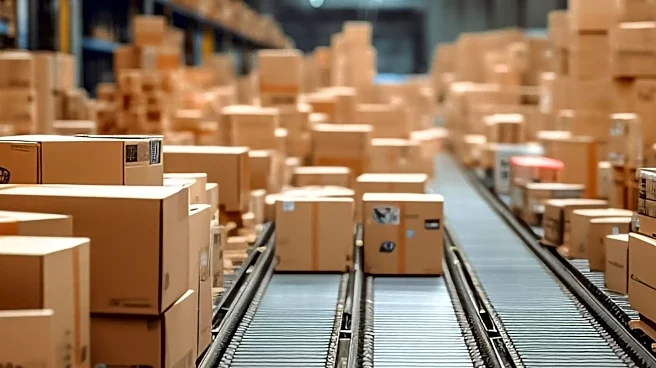
Warehousing companies are increasingly leveraging Professional Employer Organizations (PEOs) to manage complex administrative tasks, allowing them to focus on core logistics and operational efficiency. PEOs enter into a co-employment relationship, providing
support in critical areas such as payroll administration, human resources, employee benefits, compliance, and risk management. This partnership helps warehousing firms navigate challenges like recruiting and onboarding workers, managing diverse payroll structures, adhering to employment laws, and handling workplace safety. By outsourcing these functions, companies can reduce administrative burdens and access specialized expertise that might otherwise be unavailable or too costly to maintain in-house. This support is particularly crucial in the fast-paced, labor-intensive, and highly regulated warehouse industry, where administrative responsibilities can quickly become overwhelming as operations expand.
Why It's Important?
The integration of PEO services is vital for the U.S. warehousing sector as it directly impacts supply chain efficiency and workforce stability. By streamlining payroll, HR, and compliance, PEOs enable warehousing companies to enhance employee satisfaction through timely payments and better benefits, which in turn can improve retention rates in a sector often challenged by high turnover. Access to comprehensive benefits packages, typically available to larger corporations, helps smaller and mid-sized warehousing firms attract and retain talent. Furthermore, PEOs assist in navigating complex regulatory landscapes, reducing the risk of non-compliance and associated penalties. Improved workplace safety programs, guided by PEOs, lead to fewer incidents, lower workers' compensation costs, and a more productive work environment, all of which contribute to the overall resilience and effectiveness of the national supply chain.
What's Next?
As the demand for efficient supply chain management continues to grow, more warehousing companies are expected to explore partnerships with PEOs. The trend suggests a continued shift towards outsourcing non-core administrative functions to specialized providers. PEOs will likely expand their service offerings to meet evolving industry needs, such as advanced workforce management technology and more tailored compliance solutions for specific warehouse operations. Warehousing companies will increasingly seek PEOs with industry-specific experience in logistics and distribution to ensure relevant and effective support. This collaboration is anticipated to foster greater operational agility, allowing warehousing businesses to adapt more quickly to market fluctuations and technological advancements, ultimately strengthening the broader U.S. logistics infrastructure.
Beyond the Headlines
The reliance on PEOs by warehousing companies highlights a broader economic trend towards specialized service outsourcing, reflecting a strategic move to optimize resource allocation and mitigate operational risks. This model allows businesses to leverage economies of scale for benefits and HR expertise, democratizing access to resources traditionally reserved for larger enterprises. Ethically, it raises questions about the balance of control and responsibility in co-employment relationships, particularly concerning employee welfare and accountability. Legally, the evolving landscape of employment law necessitates continuous adaptation from both PEOs and their client companies to ensure compliance. Culturally, it signifies a shift in management philosophy, where operational focus takes precedence over in-house administrative management, potentially fostering a more efficient yet interdependent business ecosystem within the U.S. economy.