







What's Happening?
Australian researchers have discovered a method to utilize waste from cultivated meat production to grow microalgae, which can then be repurposed to replace expensive growth factors in cell-cultured proteins. This innovation, developed by scientists at the University
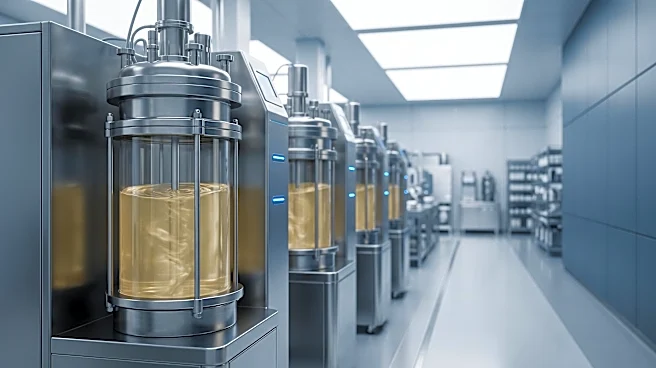
of Queensland in collaboration with Melbourne-based startup Magic Valley, aims to address one of the primary barriers to the large-scale availability of cultivated meat: high production costs. The team found that microalgae, specifically Chlorella BDH-1, can be grown on spent culture media from cultivated meat, acting as a substitute for amino acids and animal serum. This closed-loop system not only absorbs leftover nutrients from the waste but also supplies oxygen to the meat cells, creating a self-sustaining circular bioeconomy. Initial calculations suggest this method could reduce growth media costs by 60-90%. The study, published in Food Research International, indicates that algal lysate combined with algal co-cultivation can compensate for a 50% reduction in amino acids and serum, and even improve muscle cell growth by 40%.
Why It's Important?
The high cost of culture media and growth factors has been a significant impediment to the commercial viability and widespread adoption of cultivated meat. By substantially reducing these costs, this research could accelerate the pathway to commercial-scale cultivated meat production, making it more accessible and affordable for consumers. This development is crucial for the alternative protein industry, which seeks to provide sustainable and ethical alternatives to traditional meat production. Lowering production expenses could also mitigate ethical concerns associated with animal-derived inputs like fetal bovine serum, which are currently used in some cultivated meat processes. For the U.S. market, where cultivated meat is slowly gaining regulatory approval, cost reduction is key to competing with conventional meat products and achieving market penetration. Companies like Magic Valley, which is working on commercializing cultivated pork, stand to gain significantly from such cost-saving innovations, potentially allowing them to scale operations and bring products to market more efficiently.
What's Next?
The University of Queensland team plans to focus on scaling up the co-cultivation system to produce sufficient microalgal biomass for lysate production. This involves addressing engineering challenges such as spatial separation of algae and mammalian cells, decoupling oxygenation, and optimizing light delivery and biomass separation. Successful scale-up will be critical for integrating this closed-loop system into large-scale production facilities. Magic Valley, which supplied waste material for the project, is actively working on commercializing its cultivated pork and is currently fundraising to transition from lab research to commercial production. The company has already sampled its products at restaurants and on TV shows, and has received government funding for commercialization efforts. Continued research and development in this area could lead to further cost reductions and efficiency improvements, potentially paving the way for broader regulatory approvals and consumer acceptance of cultivated meat products in the U.S. and globally.
Beyond the Headlines
Beyond the immediate economic benefits, this innovation represents a significant step towards a more sustainable and circular food system. By transforming waste into valuable resources, the cultivated meat industry can reduce its environmental footprint and enhance resource efficiency. This approach aligns with broader global efforts to develop circular bioeconomies, where waste products are minimized and resources are continuously reused. The ethical implications are also noteworthy, as reducing reliance on animal-derived components in cultivated meat production could appeal to a wider consumer base concerned with animal welfare. Furthermore, the success of such technologies could influence public perception of novel foods, potentially fostering greater trust and acceptance. As regulatory bodies in the U.S. and other countries continue to evaluate and approve cultivated meat products, innovations that address both cost and sustainability will be vital for shaping the future of food production and consumption.