
What's Happening?
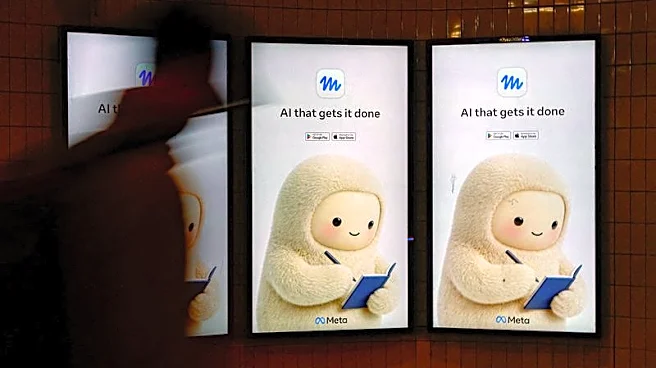
Meta has entered the wearable AI market with its new Muse Charm Gadget, priced at approximately $300. This device aims to compete in the rapidly growing sector of AI pendants and clip-ons, which Counterpoint
Research estimates will generate $24 billion in revenue between 2026 and 2032. The Muse Charm features built-in 5G connectivity, offering up to 12 months of free Verizon 5G service, allowing it to function independently of a smartphone. It includes a 2-inch OLED screen, cameras, and speakers, all housed in an AirPods-sized case. Meta has reportedly pushed its smartwatch release to 2027 to prioritize the Muse Charm for the December holiday season, aligning with an internal goal of selling 10 million wearables in the second half of 2026.
Why It's Important?
Meta's entry into the AI pendant market signifies a major tech giant's commitment to this emerging wearable category, potentially accelerating its growth and mainstream adoption. The Muse Charm's standalone 5G connectivity is a key differentiator from many rivals that tether to smartphones via Bluetooth, suggesting Meta's bet on premium features justifying its price point. The bundled Verizon 5G service effectively reduces the first-year hardware cost, making it more competitive against devices like the Humane AI Pin. However, the device faces challenges, as the Muse AI assistant is already available on smartphones, and Meta's Ray-Ban glasses offer similar AI capabilities with added eyewear functionality. The long-term success will depend on whether the Muse Charm can offer unique AI contexts and functionalities that a smartphone cannot, especially after the free 5G period ends and monthly fees apply.
What's Next?
Meta's immediate focus will be on the holiday season sales for the Muse Charm, leveraging the Verizon 5G bundle to attract initial buyers. The company will need to clearly articulate the unique value proposition of the Muse Charm beyond what its existing AI assistant offers on smartphones. Post-holiday, Meta will likely monitor user engagement and feedback to refine the device's features and address any perceived redundancies with smartphones. The expiration of the free 5G service will be a critical juncture, as user retention will depend on the perceived value of continued connectivity and exclusive features. Future developments may include deeper integration with Meta's ecosystem and the introduction of new AI capabilities that leverage the device's cameras and speakers in novel ways.
Beyond the Headlines
The introduction of the Muse Charm by Meta highlights a broader industry push towards ambient computing and the decentralization of AI from traditional smartphone interfaces. This trend raises questions about the future role of smartphones as primary computing devices and the potential for a more pervasive, always-on AI presence in daily life. Ethical considerations around continuous recording, data privacy, and the potential for constant digital interaction will become more prominent as these devices gain traction. Meta's strategy also reflects a competitive landscape where tech giants are vying to establish dominance in the next generation of personal computing, moving beyond screens to more integrated and context-aware AI experiences. The success or failure of devices like the Muse Charm will significantly influence the direction of wearable technology and AI integration in consumer products.