


What's Happening?
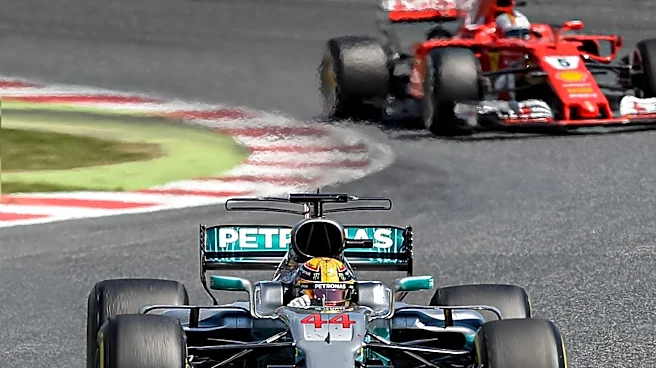
Nico Rosberg, a former Formula 1 world champion, has provided an in-depth account of the breakdown in his relationship with Lewis Hamilton during their time as teammates at Mercedes. Rosberg described the process as a 'negative spiral of becoming enemies
internally,' which intensified after Mercedes gained dominance in 2014 with the introduction of turbo-hybrid engines. A significant flashpoint occurred at the 2014 Belgian Grand Prix, where Rosberg clipped Hamilton's car, leading to public hostility and booing from fans. The rivalry became so intense that team boss Toto Wolff intervened before the 2016 season by swapping mechanics and engineers between the two drivers' garages to prevent internal tribalism and ensure information sharing. Rosberg recounted his surprise and discomfort at finding his 'family' of mechanics working on Hamilton's car, viewing them as rivals.
Why It's Important?
This detailed recollection from Nico Rosberg offers a rare glimpse into the high-stakes world of Formula 1, where personal rivalries can significantly impact team dynamics and performance. The internal conflict between two top drivers, as described by Rosberg, highlights the immense pressure and competitive environment within elite sports. The intervention by Toto Wolff to swap mechanics underscores the critical role of team management in mitigating internal strife to maintain cohesion and optimize performance. Such measures are crucial in any high-performance organization, demonstrating how personal relationships, if left unchecked, can undermine collective goals. The narrative also illustrates the psychological toll on athletes facing public scrutiny and animosity from fans, emphasizing the mental resilience required to compete at the highest level.
What's Next?
While Rosberg's account primarily focuses on past events, it provides valuable context for understanding current and future team dynamics in Formula 1. The lessons learned from this intense rivalry could influence how teams manage their drivers, especially when two highly competitive individuals are vying for the championship. Future team principals might adopt similar strategies to Wolff's, such as rotating personnel, to prevent the formation of internal factions and ensure equitable support for all drivers. This historical perspective also serves as a cautionary tale for emerging talents, illustrating the potential for camaraderie to dissolve under the immense pressure of championship contention. The ongoing discussions about team orders and driver relationships will likely continue to be informed by such high-profile examples of internal conflict.
Beyond the Headlines
The Mercedes rivalry between Rosberg and Hamilton transcends mere sporting competition, touching upon deeper themes of human psychology, professional ethics, and organizational management. The 'negative spiral' described by Rosberg reflects how intense competition can erode personal relationships, even between childhood friends. The decision to swap mechanics raises ethical questions about loyalty and the emotional impact on team members who are suddenly reassigned to support a rival. This situation highlights the tension between individual ambition and team cohesion, a challenge faced by many organizations beyond sports. The narrative also subtly critiques the fan culture that can turn competitive incidents into sources of 'hate,' underscoring the broader societal implications of public figures and their interactions.