





What's Happening?
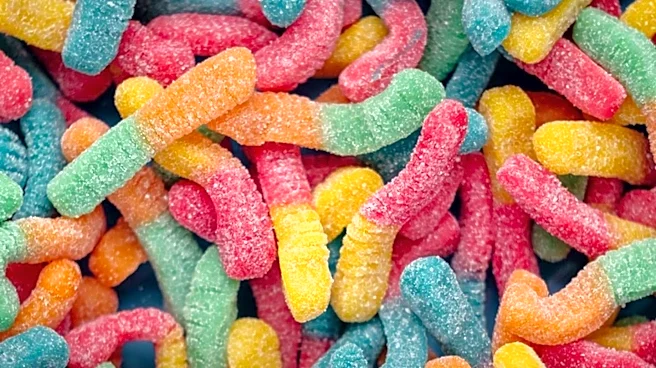
A recent trend indicates that adults in the U.S. are showing a significant preference for certain sour candies, often more so than children. This phenomenon is largely driven by nostalgia, as these candies evoke childhood memories. A study by Talker Research
revealed that two-thirds of Americans would pay a 32% premium to bring back their favorite retired childhood products, underscoring the strong emotional connection to these treats. Candies like Sour Satellite Wafers (also known as flying saucers or UFOs) and Regal Crown Sour Candy Rolls, which were popular in the mid-20th century and 1960s respectively, are examples of products that continue to appeal to adults seeking 'edible nostalgia.' These candies, despite some production interruptions, remain available in grocery stores or online.
Why It's Important?
This trend highlights a significant market segment driven by nostalgia, impacting the confectionery industry and consumer behavior in the U.S. The willingness of adults to pay more for nostalgic items suggests a powerful emotional component in purchasing decisions, which brands can leverage. This creates opportunities for companies to reintroduce classic products or market existing ones to an adult demographic, potentially extending product lifecycles and diversifying consumer bases. For the economy, this indicates a resilient niche market that can withstand price increases due to sentimental value, offering stability and growth potential for certain segments of the food and beverage industry. It also reflects broader societal trends where consumers seek comfort and connection to the past through familiar experiences.
What's Next?
Confectionery companies are likely to continue exploring and capitalizing on the nostalgia market. This could lead to the re-release of more classic sour candy brands or limited-edition 'throwback' packaging. Marketing campaigns may increasingly target adult consumers by emphasizing the sentimental value and historical context of these treats. Retailers might expand their 'retro candy' sections, both in physical stores and online, to cater to this demand. Furthermore, the success of these nostalgic products could inspire other industries to tap into similar emotional drivers, potentially influencing product development and marketing strategies across various consumer goods sectors.
Beyond the Headlines
The adult fascination with nostalgic sour candies delves deeper than mere taste preferences; it speaks to the psychological comfort and emotional security that familiar objects from childhood can provide. In an increasingly complex and rapidly changing world, these 'edible memories' offer a tangible link to simpler times, serving as a form of self-soothing and a connection to one's personal history. This phenomenon also reflects a cultural appreciation for heritage and tradition, where the craftsmanship and unique flavors of older candies are valued. It raises questions about the role of sensory experiences in memory and identity, and how consumer products can become powerful conduits for emotional well-being and cultural continuity.