







What's Happening?
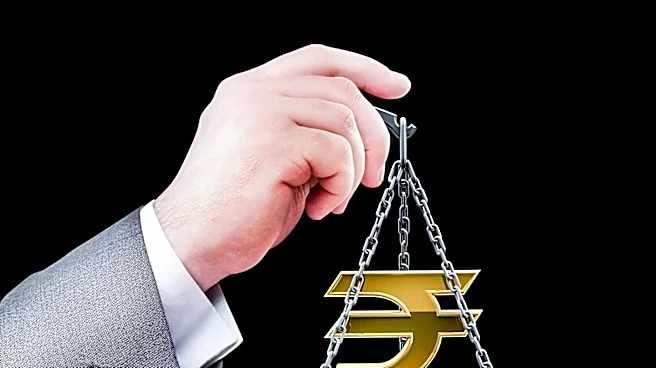
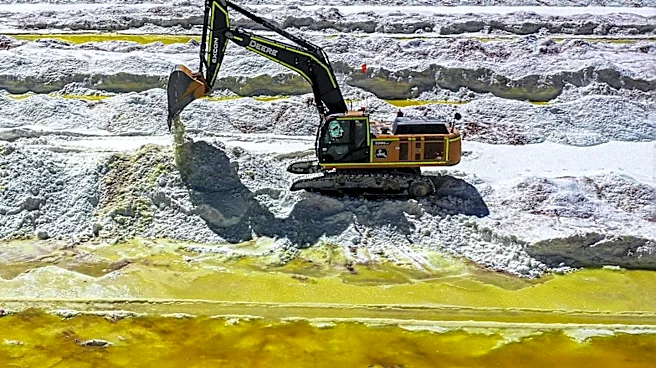
India is implementing a comprehensive industrial policy for critical minerals, involving over a dozen regulatory, financial, and trade instruments valued at nearly $40 billion. This strategy aims to build domestic manufacturing capacity across the entire
value chain, from exploration to recycling, and stimulate demand through manufacturing incentives and consumer subsidies. However, India's heavy reliance on imported mineral inputs creates transnational coordination challenges. While India seeks to secure mineral supplies from abroad, advanced economies like the U.S. are also using industrial policies to protect their own strategic productive capacities. This creates a complex environment where shared interests in supply chain security do not always align with complementary industrial objectives. For instance, Indian exports face an 18% reciprocal tariff in the U.S., and U.S. bilateral critical minerals trade deals often include preferential sourcing and restrictions on third-party actors, potentially limiting India's access to certain products or segments of the mining value chain.
Why It's Important?
India's critical minerals industrial policy has significant implications for the U.S., particularly concerning supply chain resilience and market access. As the U.S. also prioritizes securing critical minerals and strengthening domestic manufacturing, India's efforts to build its own capabilities could create both opportunities for collaboration and areas of competition. The 18% reciprocal tariff on Indian exports to the U.S. highlights existing trade barriers that could hinder deeper integration of critical mineral supply chains. U.S. companies involved in sectors like electric vehicles, renewable energy, and advanced electronics, which heavily rely on critical minerals, could face altered supply dynamics. While partnerships like the Quad Critical Minerals Initiative aim to diversify supply chains away from concentrated sources, the differing industrial objectives and protective measures by advanced economies mean that India may not gain unrestricted access to U.S. markets. This situation could influence U.S. policy decisions regarding trade agreements, investment screening, and strategic partnerships to ensure its own mineral security and manufacturing goals are met.
What's Next?
India is expected to continue implementing its multi-faceted critical minerals industrial policy, focusing on domestic capacity building and securing international supplies. The U.S. will likely continue to engage with India through initiatives like the Strategic Critical Minerals Cooperation Framework, aiming to develop resilient and diversified mineral supply chains. However, both countries will need to navigate the complexities arising from their respective industrial policies and trade protection measures. India may seek to position itself as a 'third way' in the global critical minerals ecosystem, offering a non-adversarial approach that complements but remains distinct from U.S. supply-chain strategies. This could involve joint ventures, long-term offtake arrangements, and technology partnerships with both resource-rich developing economies and advanced economies. The ongoing dialogue and negotiations will determine the extent to which India can integrate into global critical mineral supply chains while advancing its domestic ambitions, and how this impacts U.S. market access and strategic interests.
Beyond the Headlines
India's critical minerals strategy reflects a broader global trend where nations are increasingly prioritizing resource security and domestic industrial capabilities. This shift has profound implications for global trade, investment, and geopolitical stability. For the U.S., India's approach underscores the challenge of balancing strategic alliances with economic competition. The emphasis on 'third way' approaches by countries like India suggests a move away from a purely bipolar global economic structure, leading to more complex and diversified supply chains. This could necessitate a re-evaluation of existing trade frameworks and the development of more flexible and inclusive international cooperation models. The ethical dimension of critical mineral extraction and processing, including environmental impact and labor practices, will also become increasingly prominent as more countries enter this space, potentially influencing consumer choices and corporate social responsibility standards globally. The long-term success of India's policy, and its interaction with U.S. interests, will depend on its ability to navigate these intricate economic, political, and ethical landscapes.