





What's Happening?
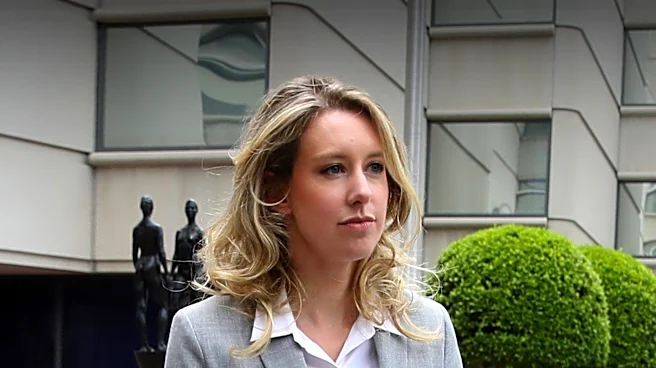
Nathan Fielder's new documentary, "You Can See Everything," focusing on convicted Theranos founder Elizabeth Holmes, had a surprise premiere at the Telluride Film Festival. The nearly three-hour film, co-directed by Fielder and Lance Oppenheim, was made
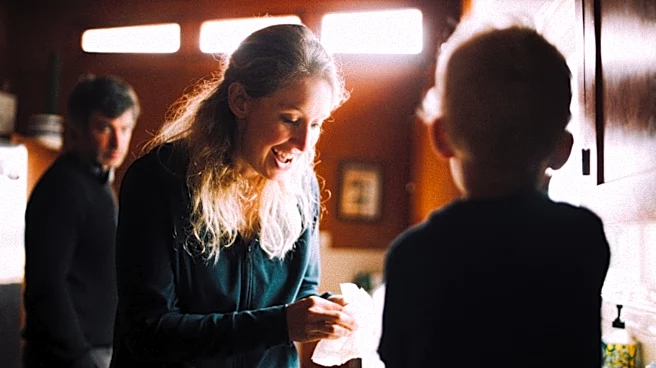
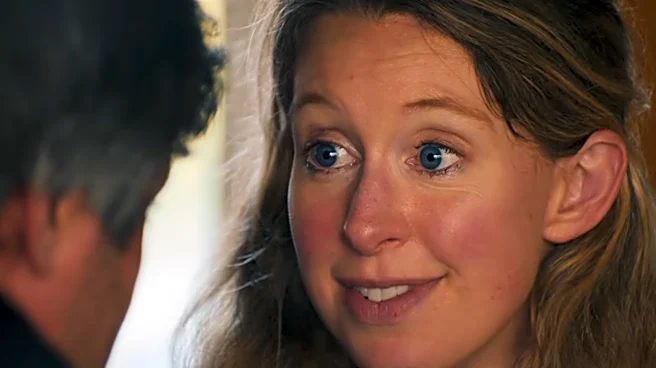
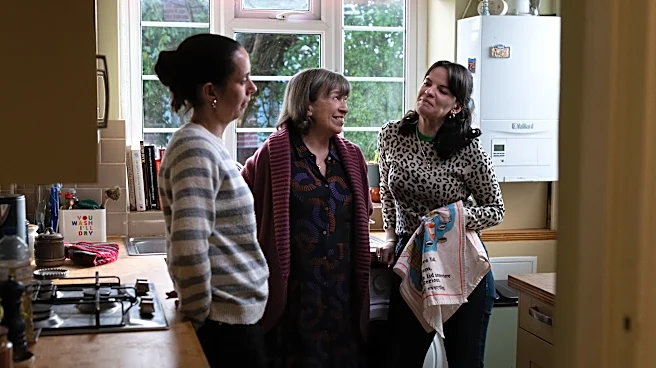
largely in secret over three years and will be released theatrically by A24 in October. The documentary begins 34 days before Holmes reported to federal prison, offering extensive access to her life with partner Billy Evans and their children. Holmes and Evans reportedly embraced "radical transparency" to convince filmmakers and the public that she has been misunderstood. The film takes surreal turns, with Fielder becoming part of the narrative as he grapples with the authenticity of Holmes and Evans. A post-screening Q&A was moderated by actress Emma Stone, who co-starred with Fielder in the A24 series "The Curse." Fielder expressed his ongoing struggle to understand his experience with Holmes, even after three years of immersion.
Why It's Important?
The premiere of "You Can See Everything" is significant as it marks a new, potentially unconventional, exploration of Elizabeth Holmes' story, a figure who has captivated public attention due to the dramatic rise and fall of Theranos. Fielder's unique, reality-bending filmmaking style suggests the documentary will offer a distinct perspective, potentially challenging existing narratives and public perceptions of Holmes. The film's secret production and surprise debut at a prestigious festival like Telluride amplify its intrigue and potential impact within the documentary landscape. The involvement of A24, known for its critically acclaimed and often boundary-pushing films, indicates a high level of artistic ambition and potential for widespread discussion. This documentary could reignite conversations about corporate ethics, media portrayal of controversial figures, and the nature of truth in documentary filmmaking, especially given Fielder's self-reflexive approach.
What's Next?
Following its secret premiere at the Telluride Film Festival, "You Can See Everything" is slated for a theatrical release by A24 in October. The filmmakers, including Nathan Fielder, have expressed a desire for future audiences to experience the film without prior knowledge of its surprises, suggesting a carefully managed release strategy. The film's release will likely generate significant media attention and public discussion, particularly given the enduring fascination with Elizabeth Holmes and the Theranos scandal. It remains to be seen how Holmes and Billy Evans, who have not seen the finished movie, will react to its public release. The documentary's unconventional narrative style and Fielder's involvement could also influence future documentary filmmaking trends, encouraging more experimental approaches to real-life subjects. Critical reception and audience engagement will determine the film's long-term impact on both the public understanding of Holmes and the documentary genre.
Beyond the Headlines
The documentary "You Can See Everything" delves into deeper implications beyond merely recounting Elizabeth Holmes' story. Fielder's struggle to discern truth from manipulation within Holmes' narrative raises profound questions about perception, authenticity, and the inherent biases in storytelling, particularly in documentary filmmaking. The film's meta-narrative, where Fielder himself becomes entangled in the subject's world, blurs the lines between observer and participant, challenging traditional journalistic ethics and the concept of objective truth. This approach could spark broader discussions about the responsibility of filmmakers when portraying controversial figures and the potential for documentaries to be manipulated or to inadvertently manipulate audience perceptions. Furthermore, the film's exploration of Holmes' attempt at "radical transparency" while facing legal consequences offers a complex look at public image management and the human desire for redemption or reinterpretation in the face of widespread condemnation.