




What's Happening?
Gold and silver prices have extended their decline, with gold falling to a fresh 2026 low, now more than $100 below the psychologically important $4,000 mark. Silver has also experienced a significant drop, down 4%. This downturn is attributed to a combination
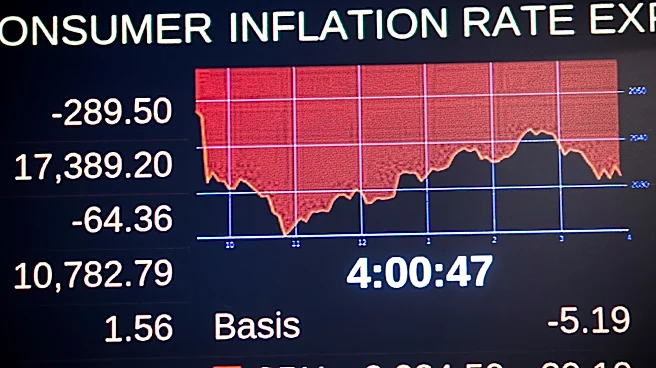
of factors: a firmer U.S. dollar, rising U.S. interest rate expectations, and fading safe-haven demand. Stronger-than-expected U.S. inflation data has reinforced the belief that interest rates will remain higher for longer, while hawkish comments from Federal Reserve officials have added to this sentiment. As non-yielding assets, precious metals tend to struggle when the opportunity cost of holding them increases and the value of the U.S. dollar strengthens.
Why It's Important?
The continued decline in gold and silver prices signals a challenging environment for precious metals investors and the broader commodity market. The strength of the U.S. dollar and the Federal Reserve's hawkish stance on interest rates are key drivers, making it more expensive to purchase dollar-denominated gold and reducing the attractiveness of non-yielding assets. This shift impacts investment strategies, potentially leading to capital reallocation from precious metals to other asset classes that offer better returns in a rising interest rate environment. The reduced safe-haven demand also suggests a perceived decrease in geopolitical risk, although this can be volatile. For industries that rely on silver, such as electronics and solar energy, sustained lower prices could impact supply chain dynamics and profitability, while also potentially stimulating demand if prices become more attractive.
What's Next?
For gold and silver prices to turn positive, a pause in U.S. dollar buying is necessary. While November through January has historically been a stronger seasonal period for gold, this trend may be overridden by current macroeconomic forces. From a technical analysis perspective, gold continues to form lower highs and lower lows, indicating a path of least resistance to the downside. Key resistance levels for gold are the $3,942–$4,000 zone, and a more significant bullish signal would require a move above $4,106–$4,150. For silver, breaking below long-term support around $50 means that a deeper correction towards the low $40s could be on the cards if the $50 level is not reclaimed quickly. The direction of the dollar and interest rate expectations will largely dictate the near-term trajectory for both metals.
Beyond the Headlines
The current market conditions underscore the sensitivity of precious metals to global economic policy and investor sentiment. While the immediate outlook is bearish, the longer-term investment case for gold and silver, particularly as a hedge against inflation and geopolitical instability, is still supported by continued central bank buying. However, the effectiveness of this hedge is currently being tested by the aggressive monetary tightening cycle. The interplay between inflation, interest rates, and currency strength creates a complex environment where traditional market correlations may shift. Investors are advised to monitor technical levels closely and avoid premature calls for a market bottom, as the balance of risks remains tilted towards further downside until more convincing evidence of a turnaround emerges.