






What's Happening?
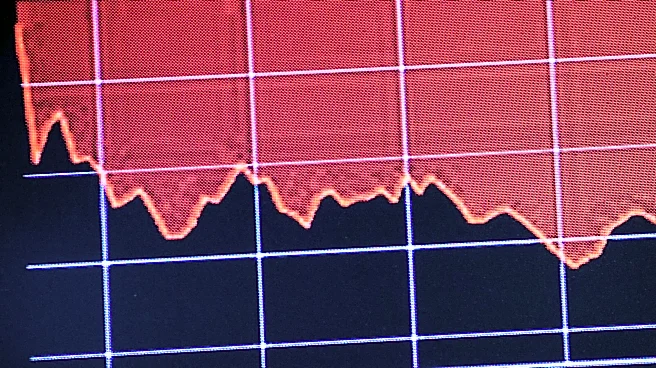
Cameco Corporation's stock (CCJ) fell by 5.6% on Friday, November 20, 2026, closing at $58.00, its lowest point in the past year. This decline occurred on a day when the S&P 500 also dropped by 3.7%. There were no specific company announcements, earnings
reports, or filings from Cameco that directly explained the stock movement. The drop coincided with a deepening sell-off in AI-related technology stocks on Wall Street, following Anthropic's stock market debut. Cameco, a Canadian uranium producer, has indicated that AI and data centers represent a potential upside for its uranium, fuel services, reactor services, and new reactor builds, though its core strategy does not rely on these factors. The company's management had previously noted some skepticism regarding whether enthusiasm for AI and new nuclear technologies had outpaced actual execution. Other uranium companies, including Uranium Energy, Energy Fuels, NexGen Energy, Denison Mines, and Centrus Energy, also experienced declines, with some falling more sharply than Cameco. The broader energy sector, represented by the XLE fund, saw only a marginal slip of 0.6%, indicating that Cameco's decline was more aligned with its uranium peers and the tech sector downturn rather than the energy sector as a whole.
Why It's Important?
The significant drop in Cameco's stock, reaching a one-year low, highlights the broader market's sensitivity to shifts in investor sentiment, particularly concerning the technology sector. While Cameco is a uranium producer, its stock performance was influenced by a sell-off in AI stocks, suggesting that investors are increasingly linking diverse industries to technological trends and future energy demands. This indicates a market perception that AI and data centers will drive increased electricity consumption, potentially boosting demand for nuclear power and, consequently, uranium. However, the recent downturn suggests a re-evaluation of the immediate impact and execution timelines for these trends. The synchronized decline among uranium peers further underscores that sector-specific factors, combined with broader market movements, can significantly affect individual stock performance. For investors, this event signals increased volatility and the need to consider how technological narratives, even those not directly tied to a company's core operations, can influence stock valuations.
What's Next?
The immediate future for Cameco's stock will likely depend on broader market sentiment, particularly regarding the technology sector and investor confidence in AI-driven growth. If the sell-off in AI stocks continues, Cameco and its uranium peers may face further downward pressure, especially given the market's current tendency to link nuclear energy demand to data center expansion. Investors will be closely watching for any new announcements from Cameco regarding its operational performance, future contracts, or strategic updates that could provide clarity on its outlook independent of tech sector volatility. Additionally, any shifts in global energy policy or increased demand for nuclear power could provide a positive catalyst. Conversely, continued skepticism about the pace of new nuclear reactor builds or the actual energy consumption of AI data centers could prolong the stock's subdued performance. The company's next earnings report and management calls will be critical in shaping investor perception and potentially stabilizing its stock price.
Beyond the Headlines
This event underscores a growing interconnectedness between seemingly disparate sectors like nuclear energy and artificial intelligence. The market's reaction to Cameco's stock suggests a speculative element where the future demand for uranium is being tied to the anticipated energy needs of AI and data centers. This creates a complex investment landscape where traditional industry analysis must now incorporate technological megatrends. The skepticism noted by Cameco's management about whether enthusiasm for AI and new nuclear has outpaced execution highlights a critical challenge: the gap between technological promise and tangible, near-term economic impact. This situation could lead to increased volatility in sectors perceived to benefit from future tech trends, as investors grapple with long-term potential versus short-term realities. It also raises questions about the sustainability of valuations driven by future-oriented narratives, especially when those narratives face scrutiny or broader market corrections.