


What's Happening?
Experts are advising caution when composting diseased tomato plants to prevent the reintroduction of pathogens into gardens. According to Nicole Jagielski, Edible Garden Designer, Coach, and Founder of Patio Produce LLC, and Natasha Grosskopf, Vegetable
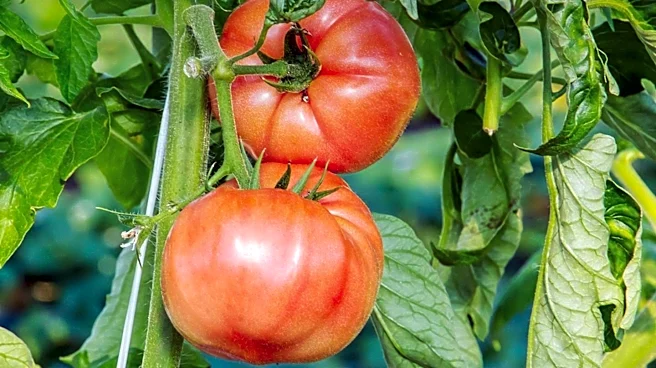
Product Manager at PanAmerican Seed, it is generally not safe to add diseased tomato plants to a home compost pile. Tomato plants are highly susceptible to diseases such as early blight, late blight, and fungal wilts. If a compost pile does not reach a sustained temperature of 160 degrees Fahrenheit for at least three days, these pathogens can survive and contaminate future gardens when the compost is used. Jagielski recommends using a compost thermometer to ensure the pile reaches the necessary temperature. If the conditions for pathogen elimination cannot be met, it is best to dispose of diseased plants in local yard waste collection rather than home composting.
Why It's Important?
This information is crucial for home gardeners and agricultural enthusiasts who rely on composting to enrich their soil. Improper composting of diseased plants can lead to a cycle of re-infection, undermining efforts to maintain healthy gardens and potentially causing significant crop losses. The advice highlights the importance of understanding the science behind composting, particularly the role of heat in killing pathogens. For the broader agricultural community, this underscores the need for careful management of plant waste to prevent the spread of diseases, which can have economic implications for farmers. Adhering to these guidelines ensures that composting remains a beneficial practice for soil health and plant vitality, rather than a source of contamination. It also emphasizes the distinction between general organic matter and potentially harmful plant residues.
What's Next?
Gardeners should prioritize identifying and separating diseased plant material from healthy organic waste intended for composting. Investing in a compost thermometer and understanding proper composting techniques to achieve and maintain high temperatures will become more critical for those wishing to compost tomato plants safely. Educational resources from gardening experts and agricultural extension offices will likely continue to emphasize these precautions. There may also be a growing interest in alternative methods for disposing of diseased plant material, such as municipal yard waste programs that can process waste at higher temperatures or through other pathogen-killing methods. The long-term implication is a more informed and cautious approach to home composting, ensuring that the practice genuinely benefits garden ecosystems.
Beyond the Headlines
The specific caution regarding diseased tomato plants in composting points to a larger principle in sustainable agriculture and gardening: the delicate balance of ecosystems and the potential for unintended consequences. While composting is a cornerstone of organic gardening, this issue highlights that not all organic matter is universally beneficial without proper processing. It encourages a deeper understanding of plant pathology and soil microbiology among home gardeners. Furthermore, it subtly touches upon the broader challenge of managing plant diseases in a world increasingly focused on reducing chemical interventions. The emphasis on high-temperature composting as a natural method for pathogen control reinforces the idea that ecological processes, when understood and managed correctly, can provide effective solutions to agricultural problems, promoting healthier and more resilient gardening practices.