
What's Happening?
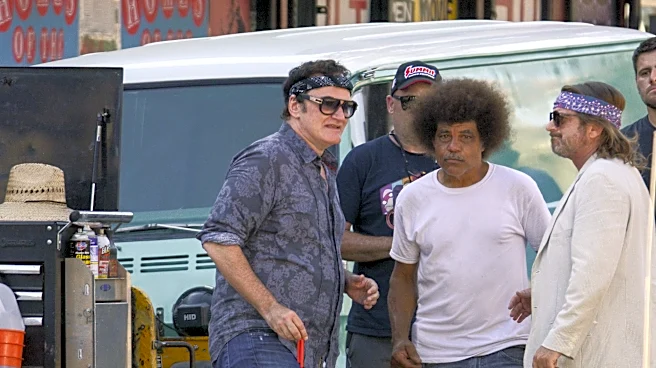
David Fincher has directed 'The Further Mis-Adventures of Cliff Booth,' a spin-off of Quentin Tarantino's 'Once Upon a Time in Hollywood,' with a screenplay by Tarantino. Brad Pitt reprises his role as Cliff Booth, a stuntman,
now working as a projectionist at the New Beverly Cinema. The film presents a more jaded and purposeless version of Booth, contrasting with his earlier portrayal. Fincher's direction applies a 'cold efficiency' to Booth's actions, including a scene where he 'gracelessly shoots a man, killing him in cold blood,' devoid of fanfare. This tonal shift reflects a Hollywood that is 'worse for the wear,' with Rick Dalton (Leonardo DiCaprio) having moved to Australia and Sharon Tate (Margot Robbie) appearing in commercials. The film explores Booth's 'macho nihilism' as he navigates a world that no longer requires his specific skills, leading him to engage in 'banal pleasure-seeking.'
Why It's Important?
This film is significant as it represents an unusual collaboration between two distinct auteurist forces, David Fincher and Quentin Tarantino, offering a unique blend of their directorial and writing styles. The reinterpretation of Cliff Booth's character from an 'all-American journeyman' to a figure grappling with 'macho nihilism' reflects a critical commentary on the changing landscape of Hollywood and the fading relevance of certain archetypes. The film's exploration of purposelessness and the search for meaning in a post-glory era resonates with broader societal anxieties about obsolescence and identity in a rapidly evolving world. For the entertainment industry, it highlights the potential for spin-offs to offer fresh, even darker, perspectives on beloved characters, challenging audience expectations and pushing creative boundaries. The film's thematic depth could spark discussions about the nature of heroism, masculinity, and the often-unromanticized realities behind cinematic myths.
What's Next?
The release of 'The Further Mis-Adventures of Cliff Booth' will likely generate considerable discussion among film critics and audiences, particularly regarding the collaboration between Fincher and Tarantino and the re-envisioning of a popular character. The film's critical reception will be crucial in determining its impact on future spin-off projects and the willingness of studios to greenlight artistically challenging sequels. Its exploration of themes like obsolescence and the dark side of heroism could influence subsequent cinematic narratives. The film's success or failure may also inform how directors with strong individual styles approach collaborative projects, especially when working with established intellectual property. Audiences will be keen to see how this darker take on Cliff Booth's story unfolds and what it says about the enduring legacy of Hollywood's golden age.
Beyond the Headlines
Beyond its immediate cinematic impact, 'The Further Mis-Adventures of Cliff Booth' delves into profound philosophical questions about purpose and identity in a world that no longer values one's core skills. Cliff Booth's struggle with 'macho nihilism' can be seen as a metaphor for individuals in any industry facing technological advancements or cultural shifts that render their expertise less relevant. The film's portrayal of a 'soulless, transactional nature of mercenary labor' also echoes broader concerns about the dehumanizing aspects of modern work and the search for genuine fulfillment. This narrative could provoke introspection among viewers about their own sense of purpose and how they adapt to changing circumstances. The collaboration between Fincher and Tarantino itself represents a fascinating case study in artistic compromise and the blending of distinct creative visions, potentially setting a precedent for future high-profile directorial partnerships.