









What's Happening?
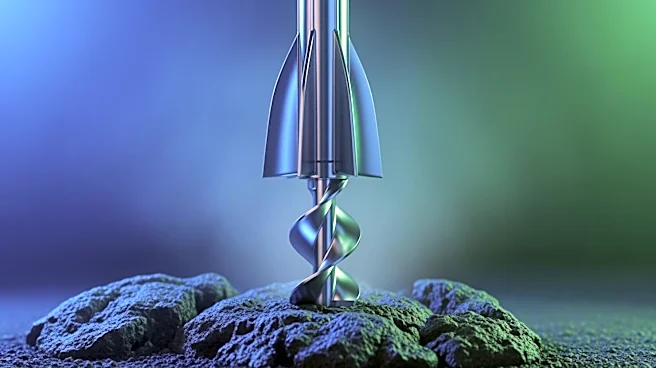
Critical Energy, a startup founded by a former SpaceX engineer, has secured $22 million in funding to innovate the geothermal energy sector. The company plans to enhance the efficiency of renewable energy sources by developing modular turbines inspired
by rocket engine technology. This initiative is seen as a crucial step in addressing the global demand for electricity. The International Energy Agency estimates the global potential of geothermal energy at 42 terawatts, which is double the total energy consumed by humanity last year. Critical Energy's approach focuses on overcoming the technological gap in geothermal energy by creating flexible and compact turbines. The startup's founder, Spencer Jackson, who previously worked on SpaceX's Falcon Heavy and Starship projects, aims to manufacture these turbines in a modular format, reducing the time and cost associated with assembling large turbines on-site.
Why It's Important?
The development of geothermal energy is significant for tech companies, as modern geothermal technologies could potentially power two-thirds of new data centers by 2030. This aligns with the increasing need for stable energy sources in the era of AI and cloud computing. Critical Energy's strategy mirrors the manufacturing approaches of Tesla and SpaceX, aiming for in-house production of all components over time. The startup's first geothermal plant is expected to launch in 2027, with a long-term goal of producing turbines with a capacity of 300 gigawatts per year by 2045. This could play a pivotal role in the global shift away from fossil fuels, offering a sustainable and efficient energy solution.
What's Next?
Critical Energy plans to apply its modular turbine technology in locations similar to existing geothermal regions, such as Iceland or Northern California. The company aims to deliver several gigawatts of power per year within the next four to five years. By establishing in-house production for its components, Critical Energy seeks to reduce reliance on external markets and streamline its manufacturing process. The startup's ambitious plan to produce 300 gigawatts of power annually by 2045 could significantly contribute to the global transition to renewable energy sources.