




What's Happening?
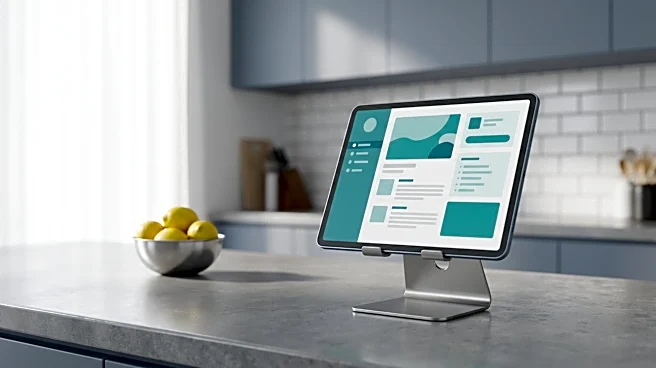
Individuals can repurpose old tablets, such as iPads or Android tablets, into dedicated kitchen displays, offering a budget-friendly alternative to expensive kitchen hubs. These repurposed devices can serve as convenient centers for accessing recipes,
setting timers, creating grocery lists, and streaming music. The process involves selecting essential apps and websites, ensuring strong Wi-Fi connectivity, and considering proximity to a wall outlet for charging. Key applications for a kitchen display include recipe apps or websites, unit conversion tools like KitchenConvert, multi-timers such as MultiTimer (available on Android 8+ and iPadOS 16+), and note-taking apps for grocery lists like Write Now for Android or Apple Notes for iPads. Music streaming services like Spotify are also compatible with older tablets, provided they meet minimum operating system requirements.
Why It's Important?
This trend of repurposing old tablets for kitchen use highlights a growing consumer interest in smart home technology and cost-effective solutions. By transforming existing devices, consumers can avoid the significant expense of dedicated kitchen hubs, which can cost upwards of $200. This approach promotes sustainability by extending the lifecycle of electronic devices, reducing e-waste. For households, a dedicated kitchen display enhances convenience and efficiency, eliminating the need to constantly handle a smartphone with messy hands while cooking. It also provides a centralized hub for kitchen-related tasks, making meal preparation and grocery planning more streamlined. This accessibility to smart kitchen functionalities without a hefty investment can democratize smart home adoption, making it available to a broader demographic.
What's Next?
The continued adoption of repurposed tablets as kitchen displays could lead to an increased demand for apps specifically optimized for this use case, focusing on hands-free operation and clear, large interfaces. Developers might also explore more integrated solutions that allow seamless interaction between these displays and other smart kitchen appliances. Furthermore, the market for accessories like tablet stands, protective cases, and long charging cables designed for kitchen environments could expand. As more consumers embrace this DIY smart kitchen approach, it might influence manufacturers of dedicated kitchen hubs to innovate with more competitive pricing or advanced features to differentiate their products. This trend could also encourage broader discussions around device longevity and sustainable technology practices.
Beyond the Headlines
Beyond the practical benefits, repurposing old tablets for kitchen displays reflects a broader cultural shift towards maximizing utility and minimizing waste in technology consumption. It challenges the notion of planned obsolescence by demonstrating that older devices can still offer significant value in new contexts. This practice also fosters a sense of resourcefulness among consumers, encouraging them to think creatively about how technology can solve everyday problems without constant upgrades. Ethically, it promotes a more sustainable approach to electronics, reducing the environmental impact associated with manufacturing and disposing of new devices. Culturally, it integrates technology more deeply into the domestic sphere, transforming the kitchen into a more connected and efficient space, reflecting the ongoing evolution of smart homes and digital living.