



What's Happening?
The Middle East's gas industry needs more than $200 billion in investment by 2030 to ensure both growth and resilience, according to industry leaders at the second Middle East Gas Conference held in Dubai. The conference, themed "Powering Progress Through
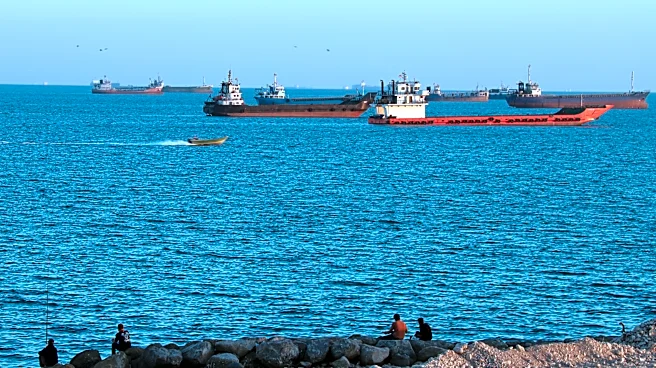
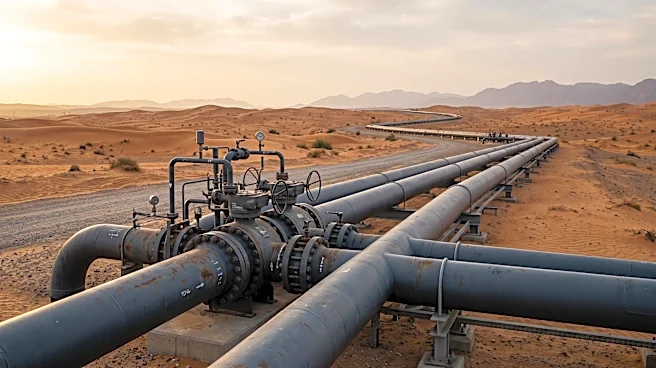
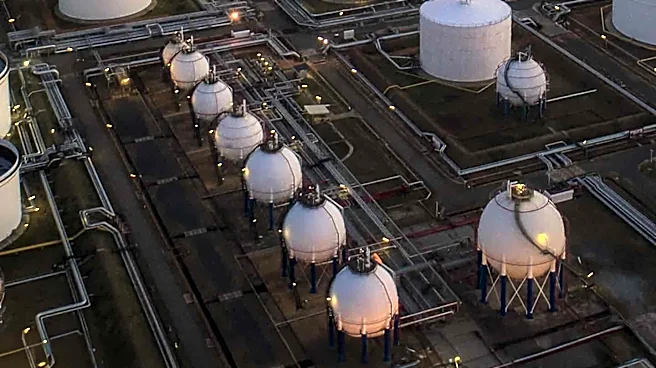
Partnership: Advancing Gas Infrastructure Across the Middle East," gathered over 150 senior policymakers, executives from national and international oil companies, investors, and infrastructure developers. Discussions focused on the region's gas realities, including upstream development, tight gas, financing, cross-border alliances, and Iraq's gas future. Majid Jafar, CEO of Crescent Petroleum and Board Managing Director of Dana Gas, highlighted that the region holds approximately 40 percent of the world's proven gas reserves, underscoring its critical role in the global economy. He emphasized the necessity of investing in new production, cross-border pipelines, export capacity beyond the Strait of Hormuz, and storage facilities to maintain supply flow even when routes are disrupted. This substantial investment is considered the largest opportunity the industry has seen in a generation.
Why It's Important?
The significant investment required in the Middle East gas sector is crucial for global energy security and economic stability. The region's substantial gas reserves make it a vital supplier to the world, and ensuring its infrastructure is resilient against disruptions is paramount. This investment will not only facilitate growth in gas production but also enhance the reliability of supply chains, which has become increasingly important given recent global events. Developing more of the region's own gas resources, building robust cross-border pipelines, and securing financing for infrastructure projects will provide producers with multiple market routes and consumers with diverse supply sources. The emphasis on resilience as an investable asset class reflects a growing recognition of the need for robust energy infrastructure that can withstand geopolitical and logistical challenges, ultimately impacting global energy prices and availability.
What's Next?
The call for over $200 billion in investment by 2030 signals a concerted effort to attract capital into the Middle East's gas sector. Future developments will likely involve increased collaboration between national and international energy companies, private investors, and financial institutions to fund these projects. The focus will be on creating fiscal terms that incentivize risk-taking in gas development, facilitating the construction of new pipelines, and establishing mechanisms to finance and protect critical infrastructure. The success of initiatives like Pearl Petroleum's $500 million bond, which attracted significant demand, indicates investor confidence in the region's gas potential. Continued partnerships and strategic alliances, as highlighted by Paul Hickin of Petroleum Economist, will be key to building the connected and resilient infrastructure necessary to power the region's growth and maintain its importance in the global energy landscape for decades to come.
Beyond the Headlines
The push for massive investment in the Middle East's gas sector extends beyond immediate energy supply concerns, touching upon broader themes of regional economic development and geopolitical influence. By strengthening its gas infrastructure, the Middle East aims to solidify its position as a pivotal energy hub, enhancing its economic leverage and stability. The emphasis on resilience also reflects a strategic shift towards long-term energy security, acknowledging that global supply chains are increasingly vulnerable. This investment could foster greater regional integration through cross-border energy projects, potentially leading to enhanced political cooperation. Furthermore, the development of advanced gas infrastructure could attract related industries and technological innovation, contributing to diversification efforts in economies traditionally reliant on oil. The ability to maintain consistent energy supplies, even amidst global volatility, will be a critical factor in shaping international relations and economic partnerships.