
What's Happening?
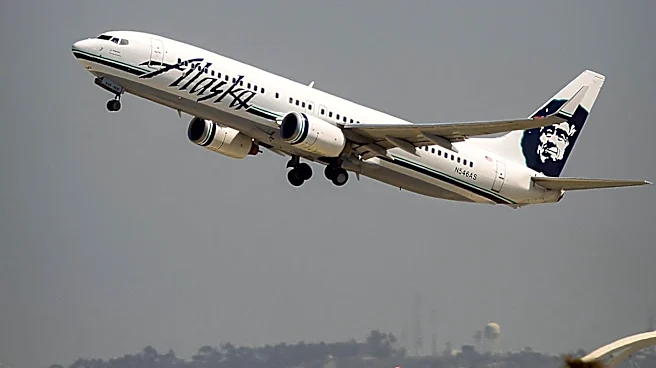
Alaska Air Group has reported a net loss of $76 million for the second quarter of 2026, primarily due to increased fuel costs. This marks a significant downturn from the $172 million profit recorded in the same
period last year. The airline's loss of $0.92 per share contrasts sharply with the previous year's earnings of $1.78 per share. The surge in fuel prices, driven by geopolitical tensions in the Middle East and the closure of the Strait of Hormuz, has been a major factor in the airline's financial performance. Despite these challenges, Alaska Air remains optimistic about returning to profitability in the third quarter if fuel prices stabilize.
Why It's Important?
The financial struggles of Alaska Air highlight the broader challenges facing the airline industry, particularly the impact of volatile fuel prices. As fuel costs constitute a significant portion of operating expenses, fluctuations can severely affect profitability. Alaska Air's situation underscores the need for airlines to develop strategies to mitigate fuel price risks, such as hedging or investing in more fuel-efficient aircraft. The airline's recent acquisition of Hawaiian Airlines assets, including long-haul Boeing 787 Dreamliners, is part of its strategy to enhance operational efficiency and expand its market presence. The outcome of these efforts will be crucial for Alaska Air's financial recovery and competitive positioning.
What's Next?
Looking ahead, Alaska Air is focused on achieving breakeven or better results in the third quarter, contingent on fuel prices stabilizing around $3.75 per gallon. The integration of Hawaiian Airlines assets is expected to contribute positively to the airline's performance, providing new opportunities for long-haul routes. Additionally, Alaska Air's leadership will continue to explore ways to optimize operations and reduce costs. The airline's ability to navigate these challenges will be critical in determining its financial health and market competitiveness in the coming months.