




What's Happening?
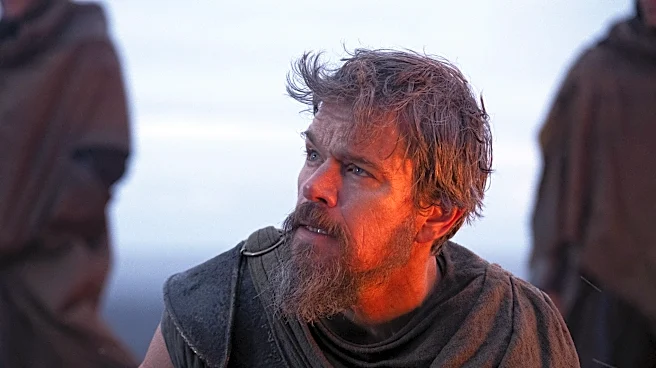
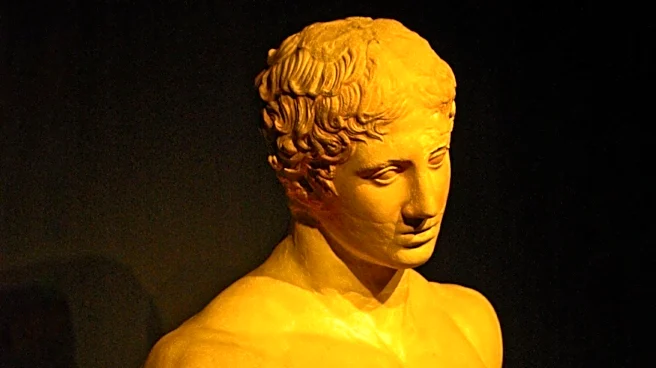
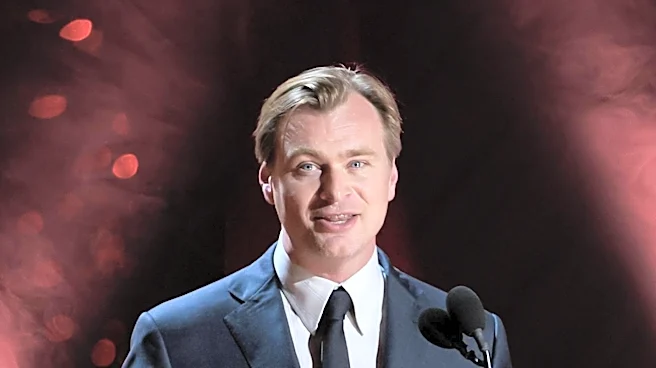
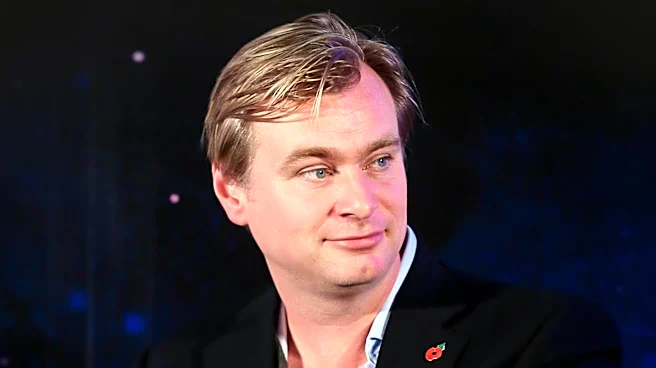
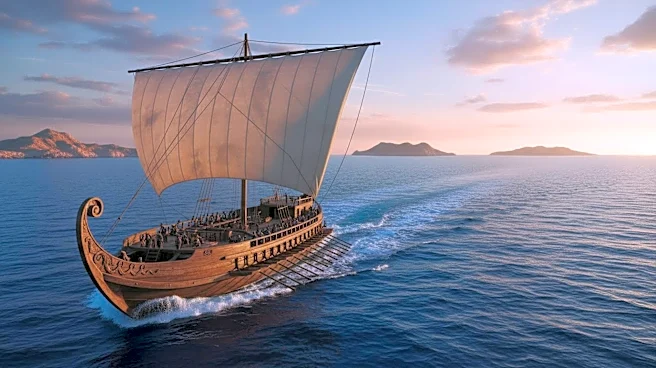
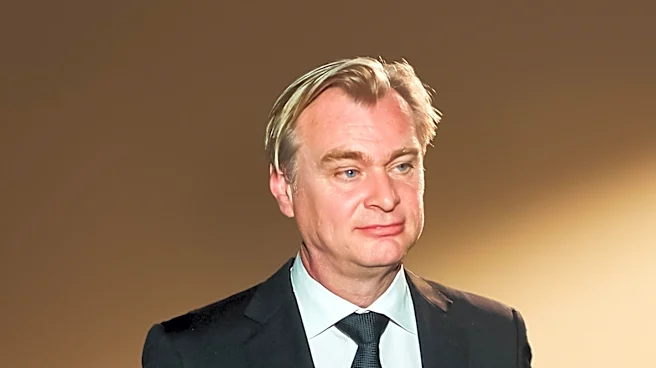
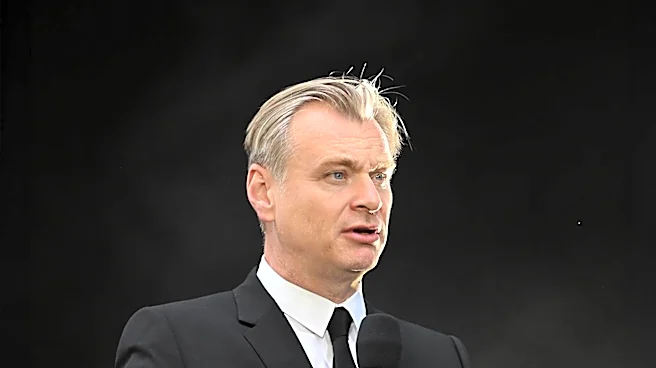
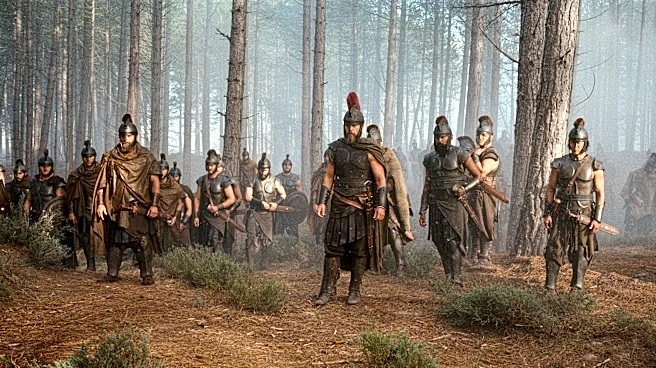
Christopher Nolan is set to release a blockbuster adaptation of Homer's 'The Odyssey' in cinemas next week. The epic tale, known for its complex narrative involving gods, monsters, and the hero Odysseus, has often been considered unfilmable due to its grand
scale and mythical elements. However, Nolan's attempt aims to bring this classic story to the big screen, potentially using his signature style to capture the essence of Odysseus's journey home after the Trojan War. The audiobook version, narrated by Anton Lesser, has been praised for its ability to evoke the story's rich imagery and emotional depth, suggesting that Nolan's film may similarly strive to balance visual spectacle with narrative fidelity.
Why It's Important?
The release of Nolan's adaptation of 'The Odyssey' is significant as it represents a bold attempt to translate a literary classic into a cinematic experience. This move could influence future adaptations of ancient texts, encouraging filmmakers to explore other complex narratives. For audiences, it offers a new way to engage with a story that has been a cornerstone of Western literature. The film's success or failure could impact the film industry’s approach to adapting classical literature, potentially opening doors for more ambitious projects. Additionally, it highlights the ongoing interest in mythological stories and their relevance in contemporary culture.
What's Next?
As the film approaches its release, anticipation is building among both fans of Nolan and enthusiasts of classical literature. The reception of the film will likely be closely watched by critics and audiences alike, with particular attention to how well it captures the essence of the original epic. If successful, it could lead to a resurgence of interest in classical adaptations, both in film and other media. The film's performance at the box office will also be a key indicator of its impact, potentially influencing future projects by Nolan and other directors.