





What's Happening?
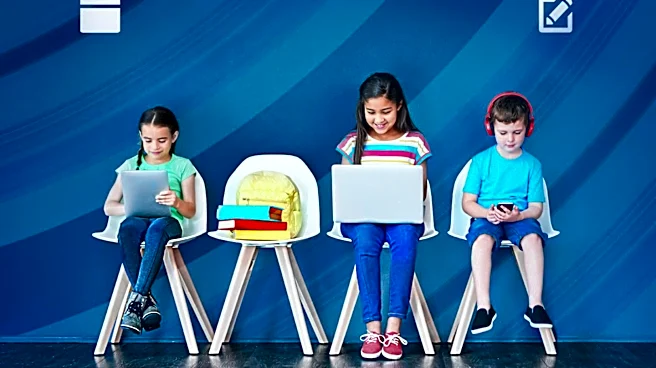
A recent study has found that children who begin using social media at the start of secondary school tend to perform worse in academic tests compared to those who delay its use. The research, conducted on over 5,000 Italian schoolchildren, revealed that students
who opened social media accounts at ages 11 to 12 scored lower in mathematics and reading tests by age 16, equivalent to a six-month learning gap. The study suggests that frequent phone checking and social media engagement may distract students from their studies. While the research does not definitively blame social media, it highlights the potential negative impact of early exposure on academic performance.
Why It's Important?
The findings of this study are significant as they contribute to the ongoing debate about the impact of social media on young people's education. With social media being a pervasive part of modern life, understanding its effects on learning is crucial for educators, parents, and policymakers. The study suggests that early social media use could hinder academic development, prompting discussions on age restrictions and the need for guidance on healthy social media habits. As countries like the UK consider implementing social media bans for under-16s, this research provides evidence to inform policy decisions aimed at safeguarding children's educational outcomes.
What's Next?
In response to these findings, there may be increased advocacy for policies that regulate social media use among young people. Educators and parents might seek to implement strategies that encourage responsible social media habits and minimize distractions. Further research could explore the long-term effects of social media on education and identify effective interventions. Policymakers may consider age restrictions or educational programs to address the challenges posed by social media. The study's implications could lead to broader discussions on balancing technology use with educational priorities.