


What's Happening?
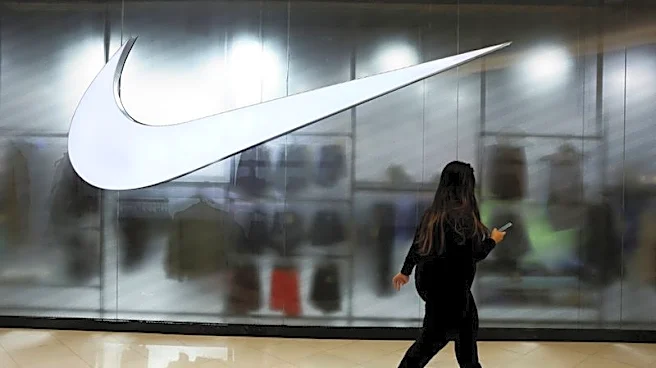
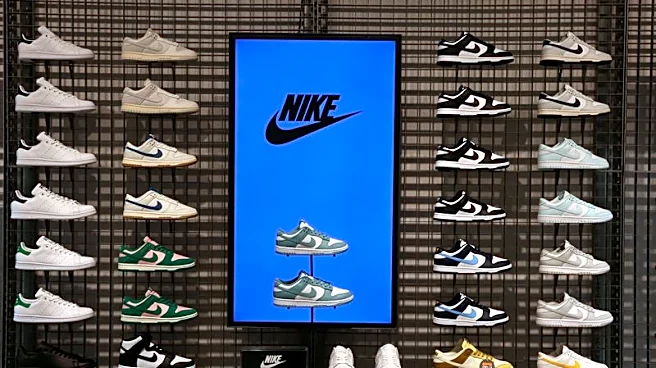
Nike announced at its November 2026 investor day that it expects revenue pressure to continue through fiscal 2028, with a high single-digit sales decline projected for fiscal 2027. The company also indicated that operating income will fall faster than
sales as it undertakes a significant reset of its product, pricing, and distribution strategies. Management aims for market-level growth in 2029, followed by faster expansion in 2030 and 2031, targeting approximately $5 billion in extra annual revenue and an operating margin of 12% to 14% by fiscal 2031. This revised outlook places increased scrutiny on execution in key segments such as Greater China, Sportswear, and Jordan, which are crucial for cash generation and margin recovery. The immediate focus for investors will be on evidence of stabilizing gross profit and operating margins even as revenue declines.
Why It's Important?
Nike's revised guidance signals a multi-year turnaround period, requiring significant patience from shareholders. The extended timeline for revenue recovery and the anticipated faster decline in operating income suggest that the company is undergoing a fundamental restructuring rather than a short-term adjustment. This could impact investor confidence and stock performance in the near to medium term. The success of Nike's reset hinges on its ability to effectively manage fixed costs, implement productivity savings, and successfully revitalize its key product lines and geographical markets. The performance in Greater China, Sportswear, and Jordan will be critical determinants of whether the long-term targets become achievable goals or remain aspirational ceilings, influencing the company's competitive position in the global sportswear market.
What's Next?
The immediate focus for Nike will be on demonstrating progress in stabilizing gross profit and operating margins amidst declining revenue. Investors will be looking for tangible signs that the product, pricing, and distribution resets are yielding positive results. The execution of strategies in Greater China, Sportswear, and Jordan will be under sharp scrutiny, as these segments are vital for the company's long-term growth and profitability. Future investor updates will likely detail the progress of the 'Pace cost program' and how productivity savings are being utilized, whether for reinvestment in marketing and product or for direct margin improvement. The company's ability to meet its fiscal 2031 targets will depend heavily on successful operational execution over the next few years.
Beyond the Headlines
Nike's strategic reset reflects broader challenges faced by established consumer brands in adapting to evolving market demands, supply chain complexities, and intense competition. The emphasis on a multi-year turnaround suggests a recognition that superficial adjustments are insufficient for sustained growth. This period of recalibration could lead to significant shifts in Nike's product portfolio, marketing strategies, and global distribution networks. The outcome of this reset will not only impact Nike's market share but could also serve as a case study for other global brands navigating similar pressures. The company's ability to innovate and reconnect with consumers in key markets like Greater China will be crucial for its long-term relevance and profitability in a dynamic global marketplace.