

What's Happening?
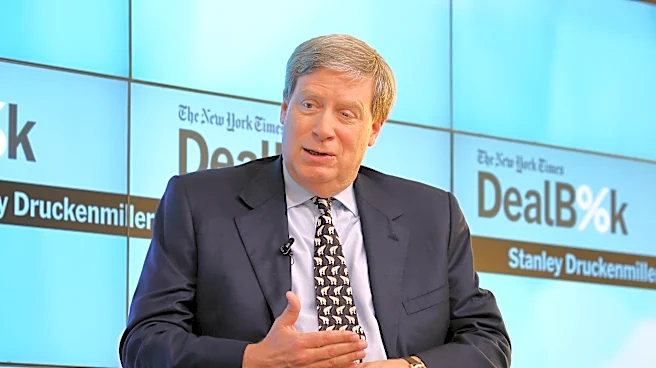
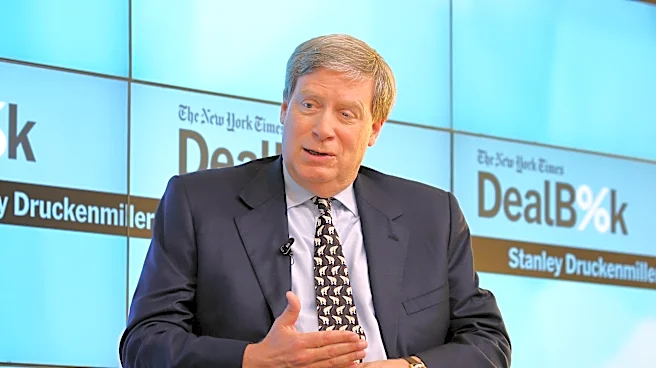
Legendary investor Stanley Druckenmiller, known for his hedge fund Duquesne Capital, has adopted a defensive market posture, stating he is "not playing" in the current environment. This shift is evident in his third-quarter portfolio adjustments, which
show a significant reduction in semiconductor holdings and an increase in gold mining stocks and hard disk drive manufacturers. According to a 13F filing by Duquesne Family Office with the U.S. Securities and Exchange Commission (SEC), Druckenmiller sold off his entire positions in AMD, ARM, SanDisk, Lam Research, and Alphabet. His stake in Taiwan foundry TSMC also decreased by 94.5 percent. Conversely, he expanded investments in high-capacity data storage companies, increasing his stake in Seagate by 180.2 percent and adding Western Digital as a new position. He also acquired significant shares in gold mining companies Newmont, Barrick Mining, and Agnico Eagle Mines, totaling approximately $129.1 million. Druckenmiller cited the Federal Reserve's pause on interest rate cuts, weakness in raw materials markets, and a widening credit spread as reasons for his cautious approach, expressing concern that the economy could disappoint in the second half of 2027.
Why It's Important?
Stanley Druckenmiller's defensive shift carries significant weight for U.S. investors and the broader market due to his track record as an "investing machine" with an average annual return of 30 percent over 30 years. His decision to reduce exposure to semiconductors, a sector that has seen substantial growth, suggests a potential cooling or increased volatility in the technology market. This could prompt other institutional and retail investors to re-evaluate their own tech holdings. The move into gold miners signals a flight to safety, indicating concerns about economic stability and inflation, which could influence commodity markets and investor sentiment towards traditional safe-haven assets. Furthermore, his focus on hard disk drive manufacturers like Seagate and Western Digital suggests a belief in the continued demand for data storage, potentially driven by long-term trends in cloud computing and enterprise data. His cautious outlook on the economy, particularly for the second half of 2027, could also impact corporate investment decisions and consumer spending, as market participants often look to such prominent investors for cues on future economic conditions.
What's Next?
Druckenmiller's current stance suggests he will remain on the sidelines until market direction becomes clearer, indicating a period of observation that could last anywhere from two days to six months. This waiting period implies that further significant portfolio adjustments from Duquesne Family Office are unlikely in the immediate future unless there is a definitive shift in market conditions or economic indicators. His expressed concern about the economy in the second half of 2027 will likely lead market analysts and investors to closely monitor economic data, particularly regarding interest rates, raw materials, and credit spreads, for any signs that align with or contradict his forecast. Other major stakeholders, including institutional investors and hedge funds, may scrutinize Druckenmiller's moves and public statements for insights into potential market shifts, possibly leading to similar defensive adjustments in their own portfolios if his concerns gain wider traction. The performance of gold and data storage stocks, as well as the semiconductor sector, will be watched to see if his predictions play out.
Beyond the Headlines
Druckenmiller's move highlights a broader philosophical approach to investing that prioritizes capital preservation during periods of high uncertainty. His declaration of "I am not playing" underscores a disciplined strategy of disengagement when conviction is low, rather than attempting to profit from volatile or unclear market conditions. This contrasts with more aggressive strategies that seek to capitalize on short-term fluctuations. The shift from high-growth tech sectors like semiconductors to more traditional safe havens like gold, alongside investments in foundational technology like data storage, reflects a nuanced view of long-term value versus short-term speculation. It also raises questions about the sustainability of current market valuations in certain sectors and the potential for a broader economic slowdown, prompting a re-evaluation of risk tolerance and asset allocation among investors. This strategic patience, even for a seasoned investor, serves as a reminder of the inherent unpredictability of financial markets and the importance of adaptability.