







What's Happening?
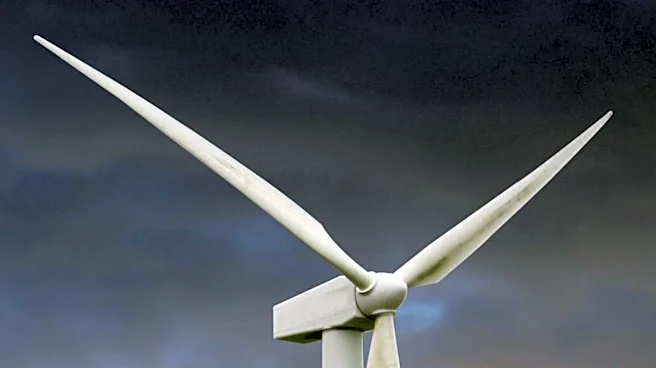
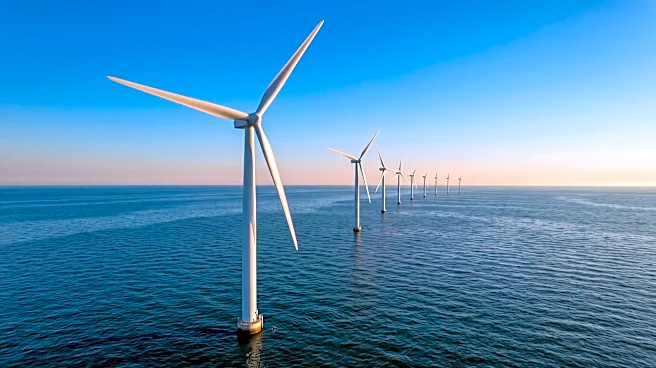
GE Vernova and Vineyard Wind have reached a settlement to resolve their legal dispute concerning the Vineyard Wind offshore wind farm. The disagreement arose from issues including withheld payments, project delays, and a blade failure that occurred in 2024.
Previously, GE Vernova had issued a termination notice for its contract, which Vineyard Wind subsequently challenged in court. Under the terms of the new agreement, GE Vernova has withdrawn its termination notice, and both parties have agreed to dismiss all outstanding legal claims. This resolution allows the Vineyard Wind project to move forward, emphasizing its role in meeting the increasing demand for electricity. Once fully operational, the wind farm is projected to generate sufficient electricity to power approximately 400,000 homes.
Why It's Important?
This resolution is significant for the U.S. renewable energy sector, particularly for offshore wind development. The Vineyard Wind project is a landmark initiative, and its successful completion is crucial for demonstrating the viability and scalability of offshore wind power in the United States. The initial dispute highlighted potential risks and complexities in large-scale renewable energy projects, including contractual disagreements and technical challenges. The settlement provides a clearer path forward for the project, reducing uncertainty for investors, developers, and stakeholders in the burgeoning U.S. offshore wind industry. It also underscores the importance of robust contractual frameworks and dispute resolution mechanisms in complex infrastructure projects. The successful operation of Vineyard Wind could serve as a model for future offshore wind developments, contributing to the nation's clean energy goals and potentially influencing policy decisions related to renewable energy incentives and regulations.
What's Next?
With the legal dispute resolved, GE Vernova and Vineyard Wind are expected to focus on the completion and full operationalization of the Vineyard Wind offshore wind farm. The emphasis will now shift to overcoming any remaining technical or logistical challenges to ensure the project delivers on its promise of powering 400,000 homes. This resolution may also encourage other developers and technology providers in the U.S. offshore wind market by demonstrating that significant disputes can be resolved, allowing projects to proceed. Future developments will likely involve continued construction, testing, and integration of the wind farm into the existing power grid. The successful rollout of Vineyard Wind could also influence future bidding rounds for offshore wind leases and the terms of power purchase agreements, potentially setting new precedents for the industry.
Beyond the Headlines
The resolution of this dispute extends beyond the immediate parties, offering broader implications for the U.S. energy transition. It highlights the intricate balance between technological innovation, financial investment, and legal frameworks required to advance large-scale renewable energy projects. The initial issues, such as blade failure and project delays, underscore the technical complexities and inherent risks in pioneering new energy infrastructure. The settlement, therefore, represents a critical step in building confidence within the supply chain and among financial institutions for future offshore wind investments. Furthermore, it reinforces the commitment to renewable energy targets in the U.S., demonstrating that even significant hurdles can be overcome to achieve clean energy goals. This outcome could foster greater collaboration between technology providers and project developers, leading to more resilient and efficient project execution in the long term.