
What's Happening?
U.S. upstream mergers and acquisitions (M&A) experienced a significant decline in the second quarter, with total activity reaching $9.1 billion, a 76% drop from the previous quarter. Despite this slowdown,
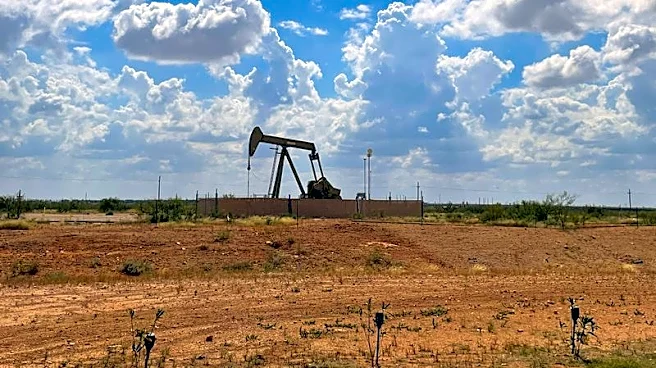
demand for premium Permian basin inventory remains robust, driven by public operators and asset-backed securitization (ABS) financing. The Bureau of Land Management's New Mexico lease sale contributed significantly to the quarter's value. Enverus Intelligence Research attributes the decline to crude price volatility and geopolitical tensions, which have widened bid-ask spreads and delayed transactions.
Why It's Important?
The decline in M&A activity highlights the challenges faced by the upstream sector due to market volatility and geopolitical factors. However, the strong demand for Permian assets underscores the basin's strategic importance in the U.S. energy landscape. The continued interest from public operators and ABS-backed private buyers indicates confidence in the long-term value of these assets. This trend could lead to increased competition and higher valuations for premium inventory, influencing future investment strategies in the sector.
What's Next?
Enverus expects M&A activity to rebound in the second half of 2026 as oil prices stabilize and improve cash flow for buyers. The firm anticipates that private companies will bring more assets to market, driven by the strong demand for high-quality drilling locations. Stakeholders will be watching for signs of market stabilization and the impact of geopolitical developments on the energy sector. The outcome of these factors will shape the future landscape of U.S. upstream M&A activity.