







What's Happening?
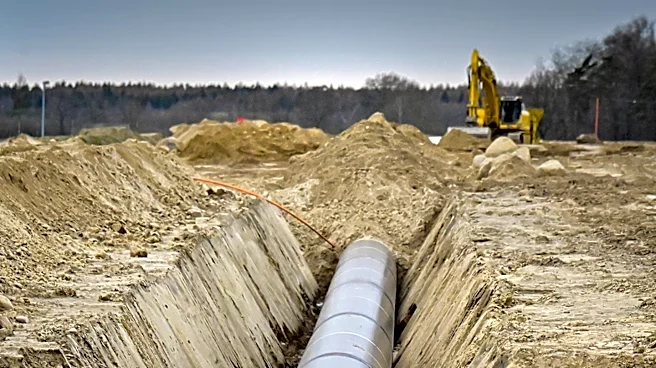
Energy Transfer has announced significant developments in its Texas gas pipeline infrastructure. The Hugh Brinson Pipeline is now in commercial service, expected to reach its full Phase I capacity of 1.5 billion cubic feet per day by September 1, 2026.
Additionally, a 14-mile lateral off the Hugh Brinson Pipeline in Abilene, Texas, has been completed and is ready for service. The company is also expanding its Desert Southwest project and has announced the Springerville Lateral on the Transwestern Pipeline to support the conversion of coal-fired plants to natural gas. Energy Transfer is responding to increased demand for natural gas services, with two customers adding a combined 100 million cubic feet per day to their existing contracts. The company plans further expansions to meet growing power demand.
Why It's Important?
The expansion of Energy Transfer's pipeline infrastructure is crucial for meeting the increasing demand for natural gas in Texas and beyond. This development supports the transition from coal to natural gas, which is a cleaner energy source, thereby contributing to environmental goals. The infrastructure expansion also supports the state's large data center capacity, which is vital for the tech industry. Additionally, the increased capacity for natural gas liquids exports at the Nederland facility highlights the growing importance of the U.S. in the global energy market. These expansions are expected to bolster Energy Transfer's financial performance, as evidenced by their increased revenue and adjusted EBITDA projections for 2026.
What's Next?
Energy Transfer is expected to announce additional natural gas pipeline projects later this year to further support the growing power demand. The company is also planning to expand its Mont Belvieu to Nederland NGL export pipeline capacity and construct two additional NGL ship docks. These developments will likely enhance the company's ability to meet both domestic and international energy needs. Stakeholders, including investors and environmental groups, will be closely monitoring these expansions for their economic and environmental impacts.