









What's Happening?
RBC Capital Markets has increased its 12-month price target for the S&P 500 by 250 points, setting it at 8,150. This adjustment reflects a 10.8% potential upside from the index's recent position. Lori Calvasina, head of U.S. equity strategy at RBC, noted
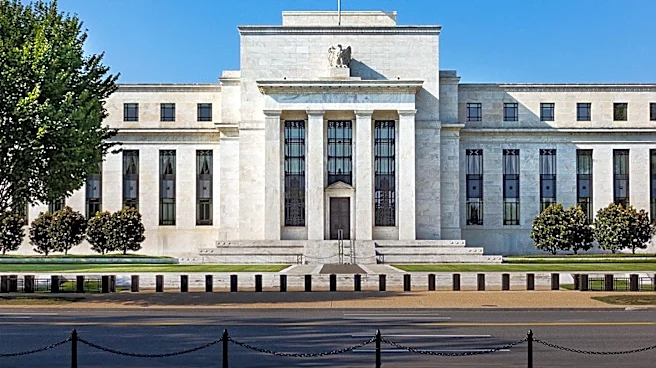
that while the forecast is optimistic, it acknowledges the likelihood of a non-linear path due to potential market volatility. The decision to raise the target is influenced by stronger signals in earnings per share and valuation expectations. Calvasina anticipates a trailing four-quarter earnings per share of $337 by the first quarter of the next year. Despite the positive outlook, there are concerns about potential interest rate hikes by the Federal Reserve, with a 64% chance of a rate increase at the September meeting. However, the prospect of lower oil prices and inflation offers some optimism.
Why It's Important?
The revised target for the S&P 500 by RBC Capital Markets is significant as it reflects confidence in the continued growth of the U.S. stock market, despite potential challenges. This forecast can influence investor sentiment and market strategies, as it suggests that the market has room to grow even amidst potential volatility. The anticipation of moderate rate hikes by the Federal Reserve and the possibility of reduced recession concerns could stabilize investor confidence. The S&P 500's performance is a critical indicator of the overall health of the U.S. economy, and its projected growth could have positive implications for various sectors, including technology, finance, and consumer goods.
What's Next?
Investors and market analysts will closely monitor the Federal Reserve's actions regarding interest rates, as these decisions will significantly impact market dynamics. The potential for moderate rate hikes could lead to 'garden variety' pullbacks, which are typical market corrections. Additionally, the performance of the S&P 500 will be watched to see if it aligns with RBC's optimistic forecast. The broader market will also be influenced by external factors such as oil prices and inflation rates, which could either bolster or hinder the projected growth.